
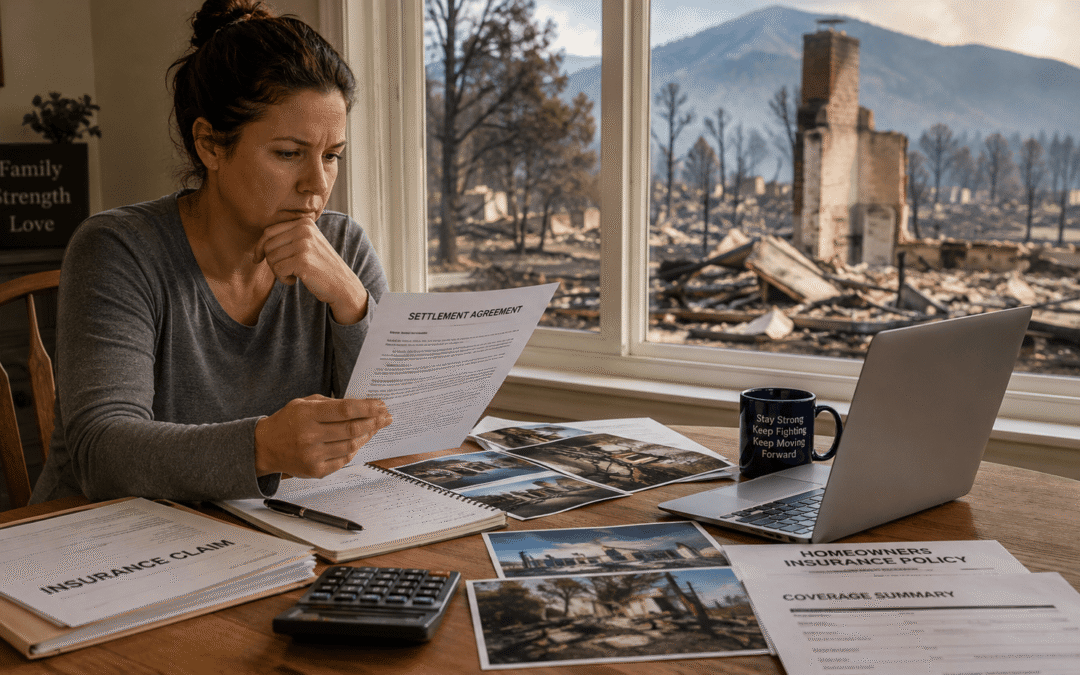
Wildfires leave behind far more than burned homes and damaged landscapes. Families often face financial uncertainty, insurance disputes, emotional trauma, and the difficult process of rebuilding their lives. While a Wildfire Settlement can provide much-needed financial relief, signing a settlement agreement is a significant legal decision that should never be rushed.
Once you accept and sign certain settlement agreements, you may give up your right to pursue additional compensation later, even if you discover more losses after the fact.
Whether your wildfire damages resulted from utility company negligence, another responsible party, or a large-scale wildfire lawsuit, understanding your legal options before agreeing to a settlement is essential.
Table of Contents:
- Understanding a Wildfire Settlement
- Why You Should Never Rush Into a Settlement?
- Question #1: Does the Settlement Cover All of My Losses?
- Question #2: Have I Calculated My Future Expenses?
- Question #3: What Rights Am I Giving Up by Signing?
- Question #4: How Was My Settlement Amount Determined?
- Question #5: Should I Speak With a Wildfire Attorney Before Signing?
- Common Mistakes People Make When Accepting a Wildfire Settlement
- What Documents Should You Review Before Signing?
- How an Attorney Can Help Maximize Your Wildfire Settlement?
- Frequently Asked Questions About Wildfire Settlements
- Protect Your Future Before You Sign
- Contact Eaton Fire Today
Understanding a Wildfire Settlement
A Wildfire Settlement is a legal agreement that resolves a claim between wildfire victims and the party responsible for their losses. Instead of taking the dispute through a lengthy court trial, both parties agree on a financial amount intended to compensate the victim.

Wildfire settlements may involve claims against:
- Utility companies
- Property owners
- Government entities
- Contractors
- Manufacturers
- Businesses responsible for fire hazards
- Insurance companies in certain disputes
Depending on the circumstances, compensation may include:
- Property damage
- Home rebuilding costs
- Personal belongings
- Smoke damage
- Vehicle losses
- Temporary housing
- Lost income
- Business interruption
- Medical expenses
- Emotional distress
- Environmental cleanup costs
Although receiving settlement funds may seem like the end of the recovery process, signing too early can create lasting financial consequences if important damages have not yet been identified.
Why You Should Never Rush Into a Settlement?
After surviving a wildfire, many victims feel pressure to accept the first settlement offer they receive. Insurance companies and defendants often seek to resolve claims quickly, especially after large-scale disasters involving thousands of victims.
However, wildfire damage often persists long after the flames are extinguished.
Examples include:
- Hidden structural damage
- Lingering smoke contamination
- Mold caused by firefighting efforts
- Reduced property values
- Delayed medical conditions
- Emotional trauma
- Future rebuilding expenses
- Long-term business losses
Because of these ongoing challenges, reviewing every aspect of a Wildfire Settlement before signing is one of the most important financial decisions you can make.
Question #1: Does the Settlement Cover All of My Losses?
The first and perhaps most important question to ask is whether the proposed Wildfire Settlement fully compensates you for every loss related to the wildfire.
Many people focus only on visible property damage, but wildfire claims often involve much more than rebuilding a house.
Consider whether your settlement includes compensation for:
Property Damage
This includes:
- Home repairs
- Complete reconstruction
- Landscaping
- Fences
- Garages
- Outbuildings
- Driveways
- Pools
- Wells
- Septic systems
Personal Property
Your belongings may include:
- Furniture
- Clothing
- Electronics
- Jewelry
- Artwork
- Family heirlooms
- Appliances
- Outdoor equipment
Replacing years of accumulated possessions can cost far more than expected.
Temporary Living Expenses
If your home became uninhabitable, you may have incurred expenses such as:
- Hotel stays
- Rental homes
- Storage fees
- Additional transportation
- Increased food costs
- Utility expenses
These costs can continue for months or even years during rebuilding.
Income Losses
Wildfires frequently interrupt employment and business operations.
Your settlement should account for:
- Missed work
- Lost contracts
- Reduced business income
- Farm losses
- Agricultural damages
Medical Costs
Smoke inhalation and wildfire exposure may cause:
- Respiratory illnesses
- Burns
- Stress-related conditions
- Mental health treatment
Future medical care may also be necessary.
If any of these losses have been overlooked, your Wildfire Settlement may not adequately compensate you.
Question #2: Have I Calculated My Future Expenses?
One of the biggest mistakes wildfire victims make is focusing only on today’s costs instead of tomorrow’s expenses.
A wildfire can affect your finances for years.

Future expenses may include:
Rising Construction Costs
Building materials often become more expensive after major wildfires because demand increases dramatically.
Common cost increases involve:
- Lumber
- Roofing
- Concrete
- Electrical systems
- Plumbing
- Labor
Your initial repair estimate may become outdated before rebuilding even begins.
Long-Term Medical Care
Smoke exposure can worsen chronic conditions like:
- Asthma
- COPD
- Heart disease
Some victims require years of medical monitoring.
Mental Health Treatment
Many wildfire survivors experience:
- Anxiety
- Depression
- PTSD
- Sleep disorders
Professional counseling may become part of long-term recovery.
Ongoing Property Expenses
Future expenses may also include:
- Debris removal
- Soil testing
- Environmental cleanup
- Tree removal
- Erosion prevention
- Hazard mitigation
A carefully negotiated Wildfire Settlement should consider not only current losses but also reasonably anticipated future damages.
Question #3: What Rights Am I Giving Up by Signing?
Every settlement agreement contains legal language that explains which rights you surrender after accepting payment.
Many agreements include a release of liability.
This generally means that once you sign:
- You cannot sue the same party again for the same wildfire.
- You may lose the ability to seek additional compensation if new damages arise.
- You may waive future legal claims related to the incident.
For example, imagine you discover hidden structural damage six months after signing a settlement. If your agreement included a broad release of claims, you may no longer have the legal right to request additional compensation.
It is important to read every provision carefully and understand:
- Whether the release is limited or broad.
- Which parties are covered by the release.
- Whether unknown future damages are included.
- Whether additional claims remain possible under certain circumstances.
Understanding these legal consequences before signing a Wildfire Settlement can help you avoid giving up valuable rights unknowingly.
Question #4: How Was My Settlement Amount Determined?
You should never accept a settlement without understanding how the amount was calculated.
Ask for a detailed explanation of the evaluation process.
Factors commonly considered include:
Property Valuation
The settlement should accurately reflect:
- Market value
- Replacement cost
- Repair estimates
- Depreciation calculations
Documentation
Supporting evidence may include:
- Insurance policies
- Repair estimates
- Receipts
- Photographs
- Videos
- Contractor reports
- Appraisals
Economic Losses
Financial experts may evaluate:
- Lost wages
- Business income
- Future earning capacity
Non-Economic Damages
Some wildfire claims also consider:
- Emotional distress
- Pain and suffering
- Loss of enjoyment of property
- Psychological trauma
If the settlement amount appears much lower than your documented losses, ask for clarification before accepting the offer.
A fair Wildfire Settlement should be supported by evidence rather than arbitrary estimates.
Question #5: Should I Speak With a Wildfire Attorney Before Signing?
In nearly every situation, consulting an attorney before signing a settlement agreement is a wise decision.

An experienced wildfire attorney can review:
- Settlement terms
- Damage estimates
- Insurance payments
- Legal releases
- Future claims
- Evidence supporting compensation
They may also identify damages that were overlooked during negotiations.
Attorneys can often work with:
- Construction experts
- Engineers
- Medical professionals
- Financial analysts
- Environmental specialists
These experts help establish the true value of your claim.
Even if you ultimately decide to accept the settlement, obtaining legal guidance can provide peace of mind that you fully understand the agreement before signing.
Common Mistakes People Make When Accepting a Wildfire Settlement
Many wildfire victims unknowingly reduce their financial recovery by making avoidable mistakes.
Some of the most common include:
Accepting the First Offer
Initial settlement offers are not always the highest available compensation.
Taking time to evaluate the offer may lead to a better outcome.
Underestimating Smoke Damage
Smoke can permanently affect:
- HVAC systems
- Electronics
- Furniture
- Clothing
- Walls
- Insulation
Professional inspections often reveal damage that is not immediately visible.
Forgetting Future Costs
Many rebuilding expenses arise months after the wildfire.
Ignoring these costs can leave homeowners paying substantial out-of-pocket expenses.
Missing Documentation
Claims supported by strong documentation generally have a better chance of reflecting the
full extent of losses.
Helpful records include:
- Photos
- Videos
- Receipts
- Insurance correspondence
- Repair estimates
- Medical records
- Employment records
Signing Without Legal Review
Settlement agreements are legally binding documents. Reviewing them with an attorney can help identify language that may affect your future rights.
What Documents Should You Review Before Signing?
Before accepting any Wildfire Settlement, gather and carefully review all relevant documentation.

Important documents include:
- Settlement agreement
- Insurance policy
- Claim correspondence
- Repair estimates
- Contractor bids
- Property appraisals
- Medical records
- Receipts
- Temporary housing expenses
- Wage statements
- Tax records for business losses
- Photographs of damage
- Fire inspection reports
Organizing these materials helps ensure your settlement accurately reflects your total losses.
How an Attorney Can Help Maximize Your Wildfire Settlement?
Wildfire claims often involve multiple parties, complex legal issues, and extensive documentation. Having legal representation can make the process more manageable while helping protect your interests.
An attorney may assist by:
- Investigating the cause of the wildfire.
- Identifying all potentially liable parties.
- Reviewing insurance policies and settlement offers.
- Gathering evidence to support your claim.
- Working with experts to determine the full value of your losses.
- Negotiating for a more comprehensive settlement.
- Explaining the legal impact of release agreements.
- Representing you if negotiations do not result in a fair resolution.
Every wildfire claim is unique, and the amount of compensation available depends on the specific facts of your case. Legal guidance can help ensure that important damages are not overlooked before a settlement is finalized.
Frequently Asked Questions About Wildfire Settlements
How long does a Wildfire Settlement take?
The timeline varies depending on the complexity of the claim, the number of parties involved, the availability of evidence, and whether negotiations or litigation are required. Some claims resolve in months, while others may take considerably longer.
Can I negotiate a Wildfire Settlement offer?
In many cases, settlement offers can be negotiated. If you believe the proposed amount does not fully compensate you for your losses, you may have the opportunity to present additional evidence or seek legal advice before making a decision.
Will accepting a Wildfire Settlement affect my insurance claim?
It depends on the terms of the settlement and the circumstances of your case. Some settlements may interact with insurance payments or subrogation rights. Reviewing the agreement carefully can help clarify how it may affect any existing insurance claims.
What if I discover additional damage after signing?
If your settlement includes a broad release of claims, you may be unable to seek additional compensation for newly discovered losses. This is why it is important to understand the legal effect of the agreement before signing.
Do I need an attorney for a Wildfire Settlement?
While legal representation is not always required, many people choose to consult an attorney before signing a settlement agreement. An attorney can explain your rights, evaluate the proposed compensation, and help determine whether the settlement reflects the full extent of your damages.
Protect Your Future Before You Sign
A Wildfire Settlement can provide critical financial support after a devastating fire, but accepting an offer without fully understanding its terms may have long-term consequences. Asking the right questions, reviewing all documentation, accounting for future expenses, and understanding the rights you may be giving up are essential steps before signing any agreement.
Every wildfire recovery is different, and the value of a settlement depends on the specific losses, evidence, and legal circumstances involved. Taking the time to evaluate your options today can help protect your financial future and ensure you are making an informed decision.
Contact Eaton Fire Today
If you have been affected by a wildfire and are considering a Wildfire Settlement, you do not have to navigate the process alone. The experienced team at Eaton Fire is committed to helping wildfire victims understand their legal rights, evaluate settlement offers, and pursue the compensation they may be entitled to recover.

Whether you have questions about property damage, insurance disputes, smoke-related losses, or ongoing wildfire litigation, Eaton Fire is ready to provide trusted guidance every step of the way.
Contact Eaton Fire today for a free consultation. Let us review your potential Wildfire Settlement, explain your legal options, and help you move forward with confidence toward rebuilding your future.