
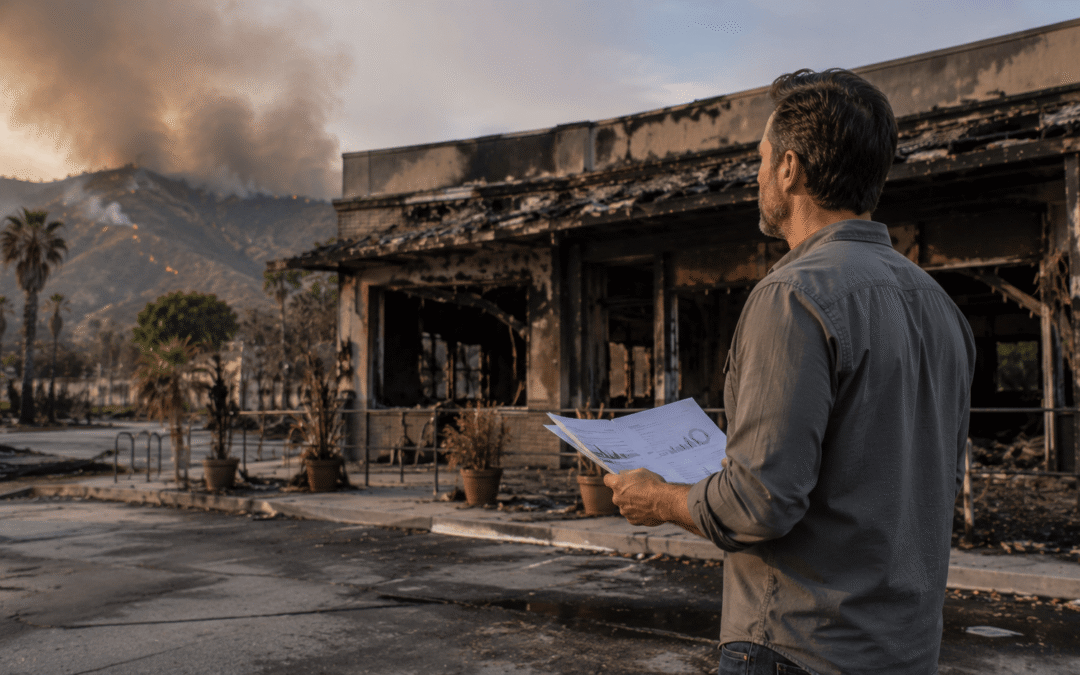
When a wildfire hits a business, the financial effects often go well beyond damaged buildings or equipment. Companies might lose customers, inventory, contracts, days of operation, and months of income. For business owners, learning about wildfire lost profits compensation is an important step in recovering.
Table of Contents:
- What Is Wildfire Lost Profits Compensation?
- What Business Losses May Be Compensated?
- How Are Wildfire Lost Profits Calculated?
- What Evidence Should Business Owners Collect?
- What Can Make a Wildfire Lost Profits Claim Difficult?
- 5 Common Questions About Wildfire Lost Profits Compensation
- Why Accurate Lost Profit Calculations Matter?
- Protect Your Business After a Wildfire
- Talk to Eaton Fire About Your Wildfire Business Losses
What Is Wildfire Lost Profits Compensation?
Wildfire lost profits compensation means financial help that may be available when a wildfire stops a business from earning the income it likely would have made if the disaster had not happened.
For example, a wildfire might force a restaurant to close for weeks, keep customers away from a store, destroy inventory, cut off utilities, or lead to a community evacuation. Even if the building is not damaged, the business can still face major financial losses. A lost profits claim usually looks at the gap between what the business was expected to earn and what it actually earned because of the wildfire.
Whether compensation is available and how much depends on things like the details of the wildfire, your insurance, the evidence you have, legal responsibility, and the type of claim you make.
What Business Losses May Be Compensated?
Wildfire losses can impact almost every part of a business. Depending on what happened, business owners may be able to get compensation for losses like:

- Lost revenue
- Lost net profits
- Business interruption
- Reduced customer traffic
- Canceled contracts or reservations
- Lost inventory
- Damage to machinery and equipment
- Temporary relocation expenses
- Additional operating costs
- Supply-chain interruptions
- Employee-related expenses
- Property damage
- Loss of future business opportunities
It’s important to know the difference between lost revenue and lost profits. Revenue is the total money a company would have received, while profit is what remains after subtracting the expenses needed to earn that revenue. This difference can significantly affect the value of a wildfire business-loss claim.
How Are Wildfire Lost Profits Calculated?
Calculating wildfire lost profits compensation often means closely reviewing a company’s past and expected financial results.
A business usually starts by reviewing its financial records from before the wildfire. Past performance shows what the business would have earned if things had stayed normal.
Relevant factors may include:
- Revenue from previous years
- Monthly and seasonal sales patterns
- Profit margins
- Existing customer contracts
- Confirmed reservations or purchase orders
- Business growth before the wildfire
- Operating expenses
- Industry conditions
- Market trends
- Duration of the interruption
For example, if a business usually made $100,000 a month with steady expenses, and a wildfire shut it down for two months, past financial records could help show what revenue and profits were likely lost during that time.
But lost profits calculations are rarely as simple as multiplying average monthly sales by the months closed. Experts may also consider avoided expenses, market changes, seasonal trends, and other details.
What Evidence Should Business Owners Collect?
A successful wildfire lost profits claim often depends on having good financial records.
Business owners should preserve as many records as possible, including:
- Tax returns
- Profit-and-loss statements
- Balance sheets
- Bank statements
- Sales reports
- Payroll records
- Inventory records
- Customer contracts
- Purchase orders
- Reservations or bookings
- Vendor agreements
- Insurance policies
- Receipts and invoices
- Photographs and videos of damage
- Records showing evacuation or closure dates
- Communications with customers and vendors
Businesses should also keep records of any expenses they have during recovery.
For example, if a company rents another space, buys new equipment, hires contractors, or pays extra shipping costs because of wildfire problems, it should keep careful records of those expenses.
The more complete your records are, the easier it will be to show how the wildfire affected your business finances.
What Can Make a Wildfire Lost Profits Claim Difficult?
Lost profits claims can get complicated because they require determining what would have happened financially if the wildfire had not occurred. Several issues can lead to disagreement.
An insurer or other party might say that a business’s projected earnings are just guesses. They could also question whether the declining revenue was due to the wildfires or something else in the economy.
Other complications can include:
- Incomplete accounting records
- Significant year-to-year revenue fluctuations
- Recently opened businesses with limited financial history.
- Disagreements about the length of the business interruption
- Disputes over operating expenses
- Questions about insurance exclusions or limitations
- Difficulty proving future contracts or expected sales
- Multiple causes of business disruption
These challenges make organized financial records especially important.
Business owners should not rely only on estimates. Whenever possible, they should back up projected losses with records, contracts, customer activity, market data, and other solid evidence.
5 Common Questions About Wildfire Lost Profits Compensation

1. Can I seek wildfire lost profits compensation if my building did not burn?
Potentially, yes.
Physical destruction of the business property is not always necessary for a company to experience a significant economic loss.
For example, your business may have been unable to operate because of:
- Mandatory evacuations
- Road closures
- Power outages
- Smoke contamination
- Supply-chain disruptions
- Customer displacement
- Damage to surrounding infrastructure
Whether compensation is available will depend on the circumstances of the loss and the applicable insurance or legal claim.
2. How do I prove how much profit my business lost?
Lost profits are generally supported through financial records and evidence showing the company’s expected performance. Useful documentation can include previous tax returns, sales histories, accounting records, customer contracts, reservations, invoices, and business forecasts.
For established businesses, historical earnings can provide a strong starting point. Newer businesses may need additional evidence, such as signed contracts, market research, pre-fire sales trends, purchase orders, and industry comparisons.
3. Can future profits be included in a wildfire claim?
In some circumstances, losses may continue after a business physically reopens.
A wildfire can permanently change customer traffic, damage a company’s reputation, eliminate customers, destroy inventory, or disrupt long-term contracts. As a result, businesses may consider whether to claim future lost income.
However, insurers can heavily scrutinize future profit claims because projections must generally be supported by credible evidence rather than speculation.
4. Does business interruption insurance cover wildfire lost profits?
Business interruption insurance may cover certain income losses resulting from a covered event, but policies vary considerably.
Coverage may depend on issues such as:
- The cause of the wildfire
- Whether there was covered physical damage
- The policy’s waiting period
- Coverage limits
- The defined restoration period
- Civil authority provisions
- Utility service interruption provisions
- Policy exclusions
Business owners should review their policies carefully and document communications about their claims.
5. What should I do immediately after a wildfire affects my business?
Begin documenting the financial impact as soon as reasonably possible. Create a detailed timeline showing when operations were interrupted, when employees or customers lost access to the property, and when business activities resumed.Preserve financial documents and, whenever possible, keep wildfire-related expenses separate.
You should also maintain copies of communications with insurers, contractors, customers, vendors, government agencies, and other relevant parties.Early documentation can make it significantly easier to understand and support the full value of your business losses.
Why Accurate Lost Profit Calculations Matter?
After a major wildfire, business owners naturally focus on rebuilding their property first.
But the economic damage can sometimes exceed the cost of the physical destruction. Consider a company that loses its building but quickly receives repair funds. If the business remains closed for six months, however, it could also lose customers, contracts, employees, and market share.
Simply repairing the building does not necessarily restore those losses. A thorough evaluation of wildfire lost profits compensation should therefore consider both immediate and longer-term financial consequences. Businesses should evaluate how the wildfire affected:
- Sales
- Profit margins
- Customer retention
- Employee availability
- Supply chains
- Contracts
- Business growth
- Future opportunities
Understanding the complete financial picture can help prevent important losses from being overlooked.
Protect Your Business After a Wildfire
Wildfires can leave business owners facing months or even years of financial uncertainty. Property repairs are only one piece of the recovery process. Lost revenue, interrupted operations, canceled contracts, displaced customers, and additional expenses can place enormous pressure on a business.
Understanding wildfire lost profits compensation is an important step toward determining the full economic impact of a wildfire. Detailed documentation, accurate financial calculations, and careful evaluation of available recovery options can help business owners pursue compensation that reflects the true extent of their losses.
Talk to Eaton Fire About Your Wildfire Business Losses
If your business has suffered financial losses because of a wildfire, do not assume that rebuilding your property is the only loss that matters. Eaton Fire helps business owners understand the full financial impact of wildfire damage, including lost income and business interruption losses.
Your company worked hard to build its customers, revenue, and future opportunities. A wildfire can disrupt all of them in a matter of hours.

Contact Eaton Fire today for a free consultation. Take action now to protect your business, document your losses, and move toward financial recovery.