
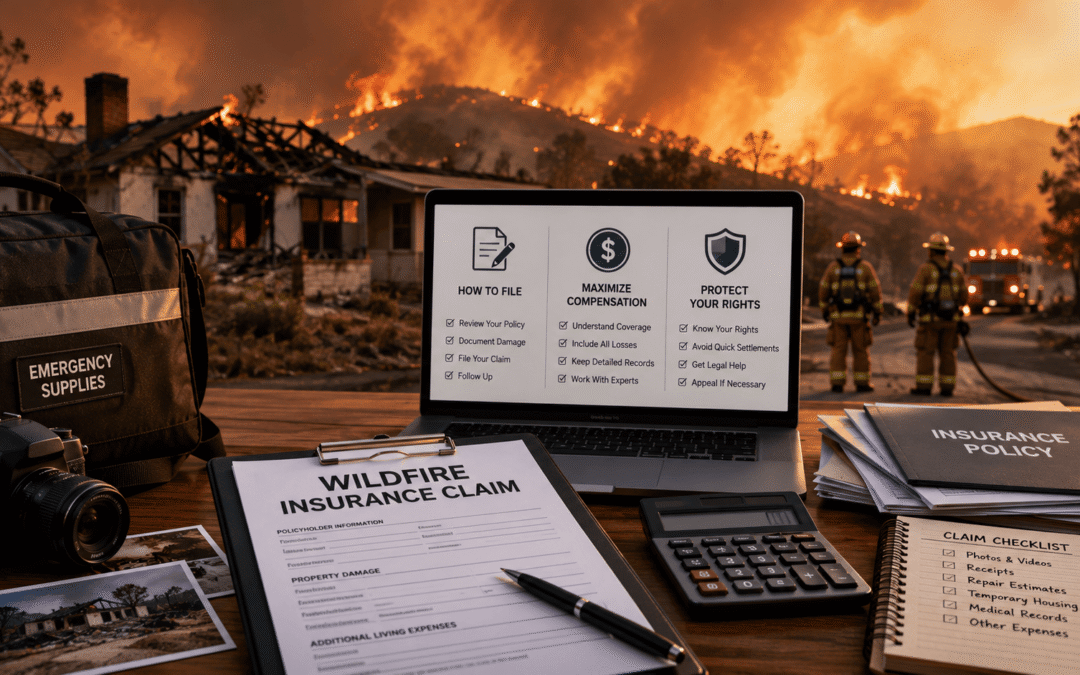
Wildfires have become increasingly destructive across the United States, leaving thousands of homeowners, renters, and business owners facing devastating losses every year. Recovering after a wildfire is emotionally, physically, and financially overwhelming. One of the most important steps toward rebuilding your life is understanding wildfire claims and knowing how to navigate the insurance process successfully.
Table of Contents:
- What Are Wildfire Claims?
- Why Wildfire Claims Are More Complex Than Other Insurance Claims?
- Types of Losses Covered by Wildfire Claims
- What to Do Immediately After a Wildfire
- Step-by-Step Guide to Filing Wildfire Claims
- Documents You’ll Need for Wildfire Claims
- Common Reasons Wildfire Claims Are Delayed or Denied
- How to Maximize Compensation for Wildfire Claims
- Understanding Additional Living Expenses (ALE)
- Smoke Damage vs. Fire Damage Claims
- What Happens If Your Insurance Offer Is Too Low?
- Can You File a Wildfire Claim Without Total Property Loss?
- Frequently Asked Questions About Wildfire Claims
- Common Mistakes to Avoid
- When to Seek Professional Help?
- Final Thoughts
- Contact Eaton Fire Today
What Are Wildfire Claims?
Wildfire claims are insurance requests made after a wildfire damages or destroys property. These claims can cover losses to homes, businesses, personal items, landscaping, vehicles, and temporary living costs.
Depending on your insurance policy, a wildfire claim can help pay for:
- Structural damage
- Complete home replacement
- Roof repairs
- Smoke damage cleanup
- Water damage from firefighting efforts
- Debris removal
- Temporary housing
- Personal property replacement
- Business interruption losses
- Additional living expenses
Wildfires often impact whole communities, so insurance companies handle thousands of claims at once. This makes the process more complicated than regular property damage claims.
Why Wildfire Claims Are More Complex Than Other Insurance Claims?
Wildfires cause large-scale damage, affecting homes, businesses, infrastructure, and entire neighborhoods all at the same time.
Unlike a single-house fire, wildfire claims often involve:
- Large-scale disasters
- Limited contractor availability
- Rising rebuilding costs
- Labor shortages
- Material price increases
- Government evacuation orders
- Smoke contamination miles away from the fire
Insurance companies often have to review hundreds or thousands of claims at once. This can lead to delays and disagreements over settlements.
If you understand your policy and carefully document your losses, you have a much better chance of getting fair compensation.
Types of Losses Covered by Wildfire Claims
Every insurance policy differs, but many wildfire claims may include coverage for several categories of damage.
Structural Damage
If your home has been partially or destroyed, your claim may cover:

- Foundation damage
- Roofing
- Walls
- Electrical systems
- Plumbing
- HVAC systems
- Garages
- Detached structures
Smoke Damage
Many homeowners do not realize how serious smoke damage can be.
Smoke can contaminate:
- Drywall
- Furniture
- Clothing
- Electronics
- Air ducts
- Insulation
- Appliances
You may need professional help to clean up smoke damage before it’s safe to return to your property.
Personal Property
Your wildfire claim may include reimbursement for:
- Furniture
- Jewelry
- Clothing
- Kitchen appliances
- Artwork
- Collectibles
- Electronics
- Family heirlooms
Making a detailed list of your belongings can help you get the most from your claim.
Additional Living Expenses (ALE)
If your home becomes uninhabitable, your insurer may cover:
- Hotel stays
- Apartment rentals
- Restaurant meals
- Laundry
- Pet boarding
- Increased transportation costs
ALE coverage can be a big help while your home is being repaired or rebuilt.
Landscaping
Some policies provide limited coverage for:
- Trees
- Shrubs
- Lawns
- Irrigation systems
- Fences
Coverage limits can be very different from one policy to another.
What to Do Immediately After a Wildfire?
What you do right after a wildfire can make a big difference in your insurance claim.
1. Ensure Everyone Is Safe
Follow evacuation orders and do not return until authorities declare the area safe.
2. Contact Your Insurance Company
Notify your insurer as soon as possible to begin the wildfire claims process.
3. Document All Damage
Take extensive photographs and videos before moving or disposing of damaged items.
4. Prevent Additional Damage
If safe to do so:
- Board broken windows
- Cover damaged roofs
- Protect belongings from weather.
Most insurance policies expect homeowners to take steps to prevent more damage.
5. Keep Every Receipt
Save receipts for:
- Hotels
- Meals
- Temporary housing
- Clothing
- Cleaning supplies
- Emergency repairs
Step-by-Step Guide to Filing Wildfire Claims
Step 1: Review Your Insurance Policy
Understand:
- Coverage limits
- Deductibles
- Exclusions
- Replacement cost provisions
Step 2: Report the Loss
Provide:
- Date of loss
- Property address
- Contact information
- Brief damage description
Step 3: Meet with the Insurance Adjuster
Walk through your property carefully.
Point out:
- Fire damage
- Smoke damage
- Water damage
- Hidden damage
Do not expect the adjuster to see every detail; point out all damage you find.
Step 4: Prepare an Inventory
List every damaged item.
Include:
- Brand
- Purchase date
- Estimated value
- Replacement cost
- Photos if available
Step 5: Obtain Repair Estimates
Getting estimates from independent contractors can help confirm the real cost of repairs.
Step 6: Review Settlement Offers Carefully
Don’t rush into accepting the first offer.
Many initial settlements fail to account for:
- Inflation
- Code upgrades
- Hidden damage
- Labor shortages
Documents You’ll Need for Wildfire Claims
Good records make your claim stronger.

Helpful records include:
- Insurance policy
- Mortgage documents
- Property deed
- Photos before the fire
- Photos after the fire
- Home inventory
- Contractor estimates
- Receipts
- Bank statements
- Tax records
- Appraisals
Common Reasons Wildfire Claims Are Delayed or Denied
Insurance companies may delay wildfire claims because of:
- Missing documentation
- Incomplete inventories
- Coverage disputes
- Policy exclusions
- Investigation of the cause
- High catastrophe claim volume
Responding quickly and keeping your paperwork organized can help your claim move forward.
How to Maximize Compensation for Wildfire Claims?
To get fair compensation, you need to be prepared and persistent.
Document Everything
Take hundreds of photographs if necessary.
Capture:
- Every room
- Exterior damage
- Smoke residue
- Structural cracks
- Landscaping losses
Maintain a Detailed Inventory
Small household items can add up fast.
Include:
- Kitchen utensils
- Towels
- Bedding
- Children’s toys
- Cleaning supplies
Understand Replacement Cost Coverage
Replacement cost policies usually offer more benefits than actual cash value policies. They pay for the cost to replace damaged property, not just its current value after depreciation.
Don’t Accept the First Offer Automatically
Insurance estimates may overlook hidden damage or underestimate rebuilding costs.
Review all offers carefully.
Keep Communication in Writing
Maintain copies of:
- Emails
- Letters
- Estimates
- Adjuster reports
- Claim numbers
Keeping written records can help settle disagreements later on.
Understanding Additional Living Expenses (ALE)
Additional Living Expense coverage is one of the most helpful parts of many wildfire claims.
ALE helps pay for reasonable expenses above your normal living costs while your home is uninhabitable.
Examples include:
- Hotels
- Rental homes
- Food
- Storage units
- Laundry
- Parking
- Pet boarding
Keep all your receipts and write down every expense.
Smoke Damage vs. Fire Damage Claims
Smoke damage is often hard to see, but it can be just as serious as fire damage.
Smoke residue may contain harmful chemicals that affect:
- Walls
- Ceilings
- Carpets
- HVAC systems
- Furniture
- Clothing
- Electronics
A professional inspection can find damage or contamination you might not notice right away.
What Happens If Your Insurance Offer Is Too Low?
If your insurer offers less than expected:
- Request a written explanation.
- Compare the estimate with independent contractor bids.
- Provide additional documentation.
- Submit supplemental claims if new damage is discovered.
- Review your policy carefully.
- Consider consulting an experienced wildfire claims professional or attorney if negotiations stall.
You do not have to take the first offer your insurance company gives you.
Can You File a Wildfire Claim Without Total Property Loss?
Absolutely.

Many successful wildfire claims involve:
- Smoke damage
- Ash contamination
- Heat damage
- Roof damage
- Water damage
- Fence damage
- Landscaping losses
Even if your home remains standing, hidden damage may still require extensive remediation and repairs.
Frequently Asked Questions About Wildfire Claims
1. How long do wildfire claims usually take?
How long a wildfire claim takes depends on how much damage there is, how complex your claim is, and how many claims the insurance company is handling. Simple claims might be finished in a few months, but bigger losses that need a full rebuild can take much longer. Staying organized and replying quickly to your insurer can help prevent delays.
2. What if my home has smoke damage but wasn’t burned?
Many homeowners insurance policies cover smoke damage. Smoke can harm walls, insulation, HVAC systems, furniture, clothing, electronics, and even the air quality in your home. To show the full extent of the damage, you often need a professional inspection and good documentation.
3. Can I start cleaning my property before the insurance adjuster arrives?
You should try to prevent more damage, but do not throw away damaged items or make big repairs until you have documented everything. Take photos and videos first, keep samples if needed, and save receipts for any emergency work.
4. What if my insurance company denies my wildfire claim?
If your claim is denied, ask for the denial and the reason in writing. Check your policy, collect more evidence, and think about asking for a second review. If you feel the denial is unfair, it can help to talk to a wildfire claims expert or attorney to learn about your options.
5. How can I maximize compensation for my wildfire claim?
To get the most compensation, start by keeping detailed records. Make a full list of damaged property, get repair estimates, save receipts for extra living costs, and keep all written communication with your insurer. Review settlement offers carefully before accepting. Knowing your policy and standing up for the full value of your losses can make a big difference in your recovery.
Common Mistakes to Avoid
Avoid these common pitfalls when handling wildfire claims:
- Waiting too long to report the loss.
- Failing to photograph damage before cleanup.
- Discarding damaged belongings too early.
- Underestimating the value of personal property.
- Forgetting to track additional living expenses.
- Accepting the first settlement offer without reviewing it carefully.
- Not obtaining independent repair estimates.
- Missing deadlines for submitting documentation.
- Failing to read and understand your insurance policy.
- Keeping poor records of conversations with your insurer.
If you stay proactive and organized, your claim will be stronger, and you are less likely to have disputes.
When to Seek Professional Help?
Some wildfire claims go smoothly, but others can get complicated because of coverage disputes, low settlement offers, or slow payments.
You may want to seek professional assistance if:
- Your claim has been denied.
- The insurance company significantly undervalues your damages.
- Your home has been declared a total loss.
- The insurer delays communication or payment.
- There are disagreements over the scope of repairs.
- You are unsure how to document extensive property losses.
Experienced professionals can help review your claim, explain your rights, and advocate for a fair settlement.
Final Thoughts
Recovering from a wildfire is one of the most challenging experiences a property owner can face. Beyond the emotional impact, the financial burden of repairing or rebuilding a home can be overwhelming. Understanding how wildfire claims work empowers you to make informed decisions, avoid costly mistakes, and pursue the compensation you deserve.
Being prepared is the key to a successful claim. Report your loss quickly, document everything, keep good records, and make sure you understand your insurance policy. If something seems off, ask questions. Whether your property has fire damage, smoke contamination, or you have to live elsewhere for a while, having a plan can make the process easier and help you get a fair result.
Keep in mind that every claim is different. Your losses, your policy details, and how complex the damage is will all affect the outcome. If you stay organized and informed, you’ll be better able to protect your property, your finances, and your future.
Contact Eaton Fire Today
When wildfire damage turns your life upside down, you don’t have to face the insurance process alone. Eaton Fire is committed to helping homeowners, renters, and business owners understand their rights and navigate the complexities of wildfire claims with confidence.

Whether you are filing a new claim, dealing with smoke damage, disputing a low settlement, or need help after a claim denial, our experienced team is ready to help you get the compensation you deserve.
Don’t let insurance challenges delay your recovery.
Contact Eaton Fire today for a free consultation and let us help you protect your rights, maximize your wildfire claim, and move forward with confidence. The sooner you act, the sooner you can begin rebuilding your home, your business, and your peace of mind.