
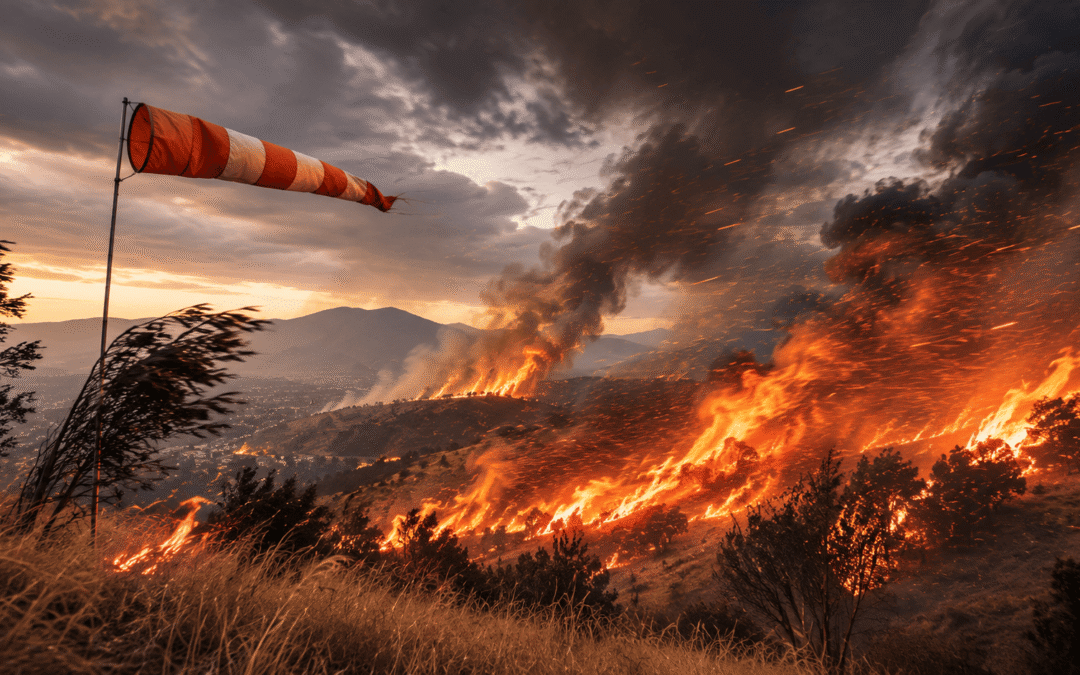
Wildfires are among the most destructive natural disasters, capable of transforming peaceful landscapes into dangerous infernos within hours. While heat, dry vegetation, and drought all contribute to wildfire behavior, one factor consistently determines how quickly a fire grows and how difficult it becomes to control: wind. Understanding why wind is a wildfire’s biggest weapon helps homeowners, communities, and emergency responders better prepare for wildfire season and minimize devastating losses.
Table of Contents:
- What Makes Wind Such a Powerful Force in Wildfires?
- Why Wind Is a Wildfire’s Biggest Weapon?
- How Wind Fuels Wildfires
- The Science Behind Wind-Driven Fires
- How Wind Changes Wildfire Behavior?
- Different Types of Wildfire Winds
- Why Firefighters Fear Wind More Than Flames?
- How Wind Creates Spot Fires?
- Wind and Home Destruction
- Terrain Makes Wind Even More Dangerous
- Wind and Smoke Behavior
- How Wind Affects Evacuations?
- Wildfire Warning Signs During Wind Events
- How Communities Can Reduce Wind-Driven Wildfire Risks?
- Climate Change and Increasing Wind-Driven Wildfires
- Why Understanding Wind Saves Lives?
- Frequently Asked Questions
- Final Thoughts
- Protect Your Home with Eaton Fire
What Makes Wind Such a Powerful Force in Wildfires?
Many people believe flames themselves are the greatest danger during a wildfire. In reality, wind often determines whether a wildfire remains manageable or becomes catastrophic.
A wildfire without significant wind may spread slowly, allowing firefighters to establish containment lines. Add strong winds, however, and the situation changes dramatically. Flames grow taller, embers travel farther, and fires can leap over highways, rivers, and firebreaks in minutes.
This explains why wind is a wildfire’s biggest weapon; it transforms an ordinary fire into a rapidly moving disaster.
Why Wind Is a Wildfire’s Biggest Weapon?
If someone asks, “Why is wind a wildfire’s biggest weapon?” the answer is surprisingly straightforward:
Wind supplies oxygen, spreads heat, carries burning embers, changes fire direction, increases flame intensity, and makes suppression efforts significantly more difficult.
Instead of simply burning what’s immediately in front of it, a wind-driven wildfire attacks from multiple directions simultaneously.
Wind allows fires to:
- Spread faster
- Burn hotter
- Jump containment lines
- Ignite new fires miles away.
- Trap people unexpectedly
- Damage structures before flames even arrive.
No other weather factor influences wildfire behavior as dramatically.
How Wind Fuels Wildfires?
Wind Provides More Oxygen
Fire requires three essential ingredients:
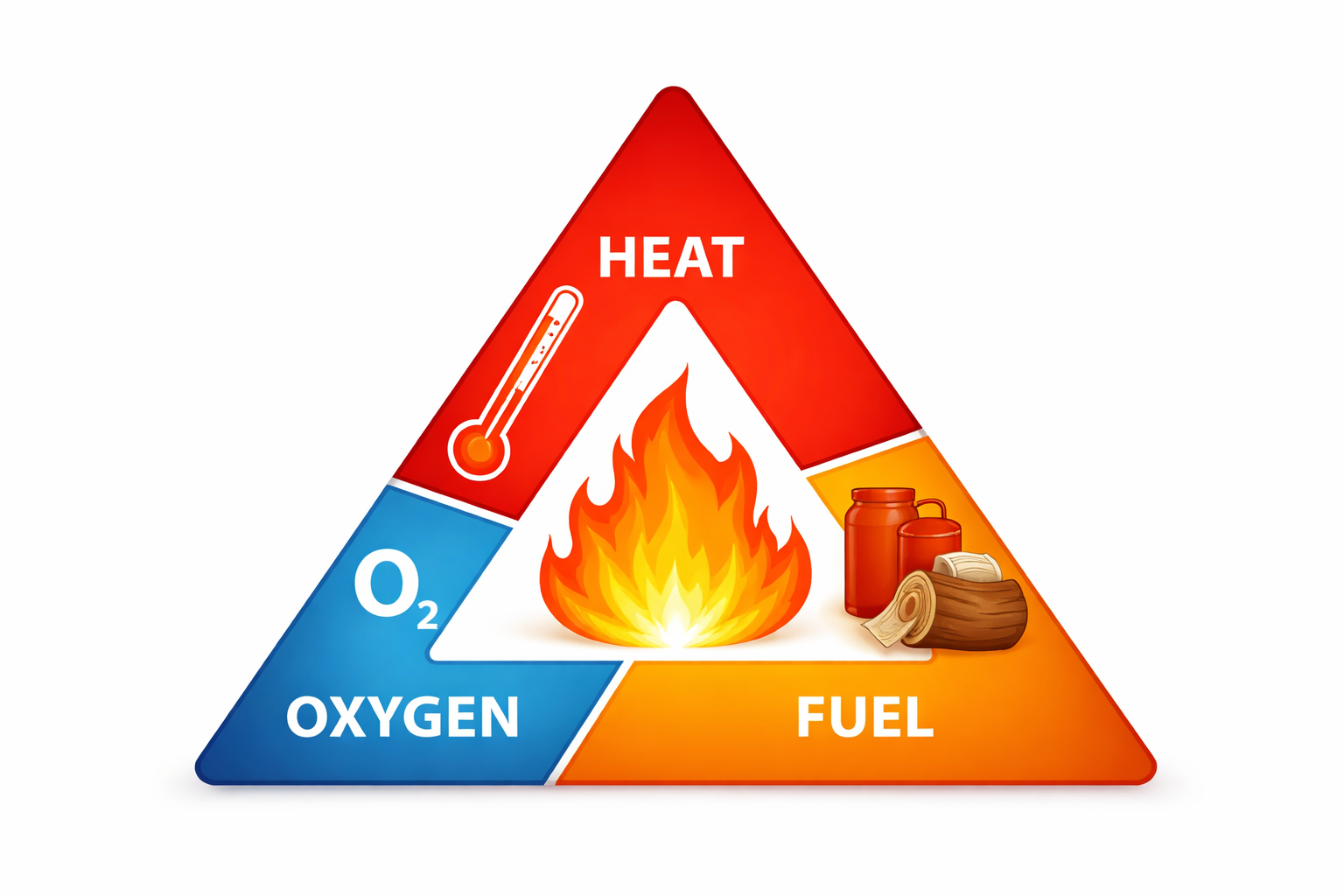
- Heat
- Fuel
- Oxygen
This is known as the Fire Triangle.
Wind continually delivers fresh oxygen to flames, allowing combustion to become stronger and more efficient.
The stronger the wind:
- The more oxygen reaches the fire.
- The hotter flames become
- The faster vegetation ignites.
Even a moderate breeze can significantly increase wildfire intensity.
Wind Pushes Flames Forward
Wind bends flames toward unburned vegetation.
Instead of flames rising vertically, they lean forward, preheating grass, shrubs, and trees before direct contact occurs.
This preheating makes ignition happen much faster.
The result:
A wildfire can double or triple its rate of spread. (Finney et al., 2015, pp. 13797-13802)
Wind Dries Vegetation
Wind also removes moisture from plants.
Even vegetation that isn’t extremely dry becomes easier to ignite after prolonged windy conditions.
Dry grasses, leaves, pine needles, and shrubs become ideal wildfire fuel.
The Science Behind Wind-Driven Fires
Scientists classify wildfire spread according to several interacting variables:
- Wind speed
- Wind direction
- Fuel moisture
- Fuel type
- Terrain
- Temperature
- Humidity
Among these, wind is often the dominant factor because it directly influences nearly every other variable.
For example:
Without wind:
- Flames spread slowly.
- Heat rises vertically.
- Embers stay nearby.
With wind:
- Flames bend forward.
- Heat transfers ahead.
- Embers travel great distances.
- New fires ignite rapidly.
This is why predicting wildfire behavior always includes detailed wind forecasting.
How Wind Changes Wildfire Behavior?
Increased Rate of Spread
The most immediate effect is speed.
A slow-moving wildfire may advance only a few feet per minute.
Under strong winds, that same fire may race across thousands of acres in hours. (Cruz & Alexander, 2019)
Fast-moving fires leave little evacuation time.
Higher Flame Length
Wind creates longer flames.
Long flames radiate more heat.
More heat means:
- Faster ignition
- More property damage
- Greater firefighter danger
Rapid Direction Changes

Wildfires don’t always move in straight lines.
Changing winds can suddenly redirect flames.
Communities thought to be safe may suddenly become directly threatened.
Firefighters must constantly adjust their strategies.
Fire Whirls
Strong winds sometimes create rotating columns of fire known as:
- Fire tornadoes
- Fire whirls
These dangerous events can:
- Throw burning debris
- Ignite structures
- Damage vehicles
- Injure firefighters (Fire Whirl Research, 2023)
Different Types of Wildfire Winds
Regional Winds
Certain regions experience seasonal winds known for increasing wildfire danger.
Examples include:
- Santa Ana Winds (California)
- Diablo Winds (Northern California)
- Chinook Winds
- Foehn Winds
These winds are:
- Dry
- Warm
- Fast-moving
Perfect conditions for explosive wildfire growth. (Borunda, 2020)
Thunderstorm Outflow Winds
Even thunderstorms without rain can create dangerous wind gusts.
These sudden bursts spread flames unpredictably.
Mountain Winds
Mountain terrain causes:
- Channeling
- Downslope acceleration
- Rapid wind shifts
This makes predicting wildfire movement much more difficult.
Why Firefighters Fear Wind More Than Flames?
Professional firefighters consistently monitor wind conditions.
Why? Because nearly every firefighting tactic depends on predictable fire movement.
Strong winds can:
- Destroy containment lines
- Blow sparks over firebreaks.
- Endanger crews
- Ground aircraft
- Reduce visibility
When winds become extreme, suppression efforts often shift from stopping the fire to protecting lives.
How Wind Creates Spot Fires?
One of the most dangerous wildfire behaviors involves spotting.
Spot fires occur when burning embers become airborne.
These embers may:
- Travel hundreds of yards.
- Cross rivers
- Cross highways
- Land on rooftops
- Ignite dry vegetation
Large wildfires have produced embers that traveled more than a mile under favorable wind conditions. (Emberometer could gauge threat of wildfire-spreading embers, 2021)
This makes wildfire containment incredibly challenging.
Wind and Home Destruction
The main fire front doesn’t destroy many homes.
Instead, they ignite because wind-blown embers land on:
- Roofs
- Gutters
- Wooden decks
- Dry mulch
- Outdoor furniture
- Vents
Even after flames pass, embers continue causing new ignitions.
Protecting homes requires reducing these ignition points.
Terrain Makes Wind Even More Dangerous
Wind doesn’t behave uniformly. Terrain changes airflow dramatically.
Examples include:
Canyons
Wind accelerates through narrow canyons.
Fires spread rapidly uphill.
Ridges
Wind speeds increase over ridges.
Flames become longer and more intense.
Valleys
Changing valley winds create unpredictable fire movement.
This complicates evacuation planning.

Wind and Smoke Behavior
Wind also influences smoke.
Smoke impacts include:
- Reduced visibility
- Poor air quality
- Respiratory illness
- Traffic hazards
- Aviation disruptions
Changing winds can move smoke hundreds of miles from the fire itself. (Acidic Deposition Phenomenon And Its Effects Critical Assessment Review Papers, 1981)
How Wind Affects Evacuations?
Evacuation planning becomes more difficult during wind-driven fires because roads that appear safe can become dangerous within minutes.
Wind may:
- Change fire direction
- Block escape routes
- Reduce visibility
- Increase panic
- Delay emergency response
This is why evacuation orders should be followed immediately.
Waiting can become life-threatening.
Wildfire Warning Signs During Wind Events
Homeowners should pay close attention when forecasts include:
- High wind warnings
- Red Flag Warnings
- Low humidity
- Heat advisories
- Dry lightning forecasts
Combined, these conditions create the highest wildfire danger.
How Communities Can Reduce Wind-Driven Wildfire Risks?
Although no one can control the wind, communities can reduce its impact through preparedness and mitigation.
Create Defensible Space
Maintain a buffer around homes by:
- Removing dead vegetation
- Trimming tree branches
- Mowing dry grass
- Cleaning gutters regularly
This reduces the amount of fuel available to wind-driven embers.
Use Fire-Resistant Building Materials
Choose materials such as:
- Metal roofing
- Tile roofing
- Fiber cement siding
- Tempered glass windows
- Ember-resistant vents
These upgrades improve a home’s resistance to ember attacks.
Maintain Landscaping
Proper landscaping can slow wildfire spread.
Recommended practices include:
- Plant fire-resistant species
- Space trees appropriately
- Keep wood piles away from structures.
- Remove fallen leaves frequently.
Prepare an Emergency Plan
Families should have:
- Evacuation routes
- Emergency kits
- Important documents ready
- Communication plans
- Pet evacuation supplies
Preparation saves valuable time during fast-moving fires.
Climate Change and Increasing Wind-Driven Wildfires
Climate change is contributing to conditions that make wildfires more severe in many regions. Longer droughts, hotter temperatures, and lower vegetation moisture increase the likelihood of large fires. When these conditions combine with strong winds, wildfires can spread with exceptional speed and intensity.
Researchers continue to study how changing weather patterns influence wildfire behavior, but emergency agencies consistently emphasize that communities should prepare for more frequent periods of elevated fire danger.
Why Understanding Wind Saves Lives?
Knowing why wind is a wildfire’s biggest weapon isn’t just useful information; it can influence critical decisions during wildfire season.
Understanding wind helps people:
- Recognize dangerous weather conditions.
- Prepare homes before fire season.
- Reduce ember-related ignition risks.
- Follow evacuation orders promptly.
- Make informed safety decisions during emergencies.
Awareness and preparation can significantly reduce the risk to lives and property.
Frequently Asked Questions
1. Why is wind considered a wildfire’s biggest weapon?
Wind feeds a wildfire with oxygen, pushes flames into new fuel, dries vegetation, and carries burning embers long distances. These combined effects allow fires to spread faster, burn hotter, and become far more difficult to contain.
2. Can wind cause a wildfire to change direction?
Yes. A sudden shift in wind direction can rapidly redirect a wildfire, putting new areas at risk and creating dangerous conditions for residents and firefighters. This is why wind forecasts are closely monitored during wildfire incidents.
3. How far can wind carry burning embers?
Depending on wind speed and fire intensity, embers can travel hundreds of yards to more than a mile. These embers may ignite roofs, vegetation, or structures well ahead of the main fire.
4. Why do firefighters monitor wind so closely?
Wind influences nearly every aspect of wildfire behavior, including flame length, speed, direction, and spotting. Accurate wind information helps firefighters choose safer tactics and protect both crews and communities.
5. How can homeowners protect their property from wind-driven wildfires?
Homeowners can reduce risk by creating defensible space, clearing gutters, removing dry vegetation, using fire-resistant building materials, maintaining ember-resistant vents, and preparing an evacuation plan before wildfire season begins.
Final Thoughts
Wind is more than just a weather condition during wildfire season; it is often the driving force behind the most destructive fires. By supplying oxygen, accelerating flames, carrying embers, and creating unpredictable fire behavior, wind turns manageable fires into fast-moving emergencies.
Understanding why wind is a wildfire’s biggest weapon empowers homeowners and communities to take practical steps that improve safety and resilience. Staying informed, maintaining your property, and acting quickly when conditions worsen can make a meaningful difference when every minute counts.

Protect Your Home with Eaton Fire
When wildfire strikes, every second matters and preparation starts long before the first spark. Eaton Fire is committed to helping homeowners and communities understand wildfire risks, strengthen their properties, and recover after fire-related damage.
Whether you’re looking for trusted wildfire resources, guidance on protecting your home, or support after a fire, Eaton Fire is here to help. Contact Eaton Fire today for a free consultation to learn how proactive planning and expert assistance can help safeguard what matters most.