
When emergencies like wildfires, hurricanes, or floods threaten your community, officials may issue alerts urging action. One crucial alert is an evacuation warning. But what exactly does that mean, and why is it critical?
Many underestimate this alert, assuming they have more time. That assumption can cause dangerous delays. An evacuation warning is your prompt to act before conditions turn life-threatening.
Table of Contents:
- What Is an Evacuation Warning?
- Why Understanding Evacuation Warnings Matters
- Evacuation Warning vs. Evacuation Order
- How Authorities Decide to Issue Warnings
- Real-Life Scenarios: How Fast Situations Escalate
- What to Do Immediately After Receiving a Warning
- Creating a Family Emergency Plan
- Building a Complete Emergency Go-Bag
- Preparing Your Home for Possible Evacuation
- Transportation and Evacuation Routes
- Protecting Pets and Livestock
- Helping Vulnerable Individuals
- Communication Strategies During Emergencies
- Common Mistakes People Make During Evacuation Warnings
- Frequently Asked Questions About Evacuation Warnings
- Final Thoughts + Strong Call to Action
What Is an Evacuation Warning?
To fully understand what an evacuation warning is, it’s important to go beyond a simple definition and examine how it operates in real-world emergency situations.
An evacuation warning is a formal alert issued by emergency management officials, such as fire departments, local governments, or disaster response agencies, when there is a serious and developing threat that could soon require residents to leave their homes.
This warning is not given randomly or “just in case.” It is based on real-time data, predictive models, and on-the-ground assessments. Authorities monitor wildfire spread, weather, flood levels, and risks. When signs point to growing danger, they issue the warning to give residents a crucial head start.
What an Evacuation Warning Really Means
- There is a credible risk of danger.
This means the threat is not hypothetical. Whether it’s a wildfire moving closer, rising floodwaters, or an approaching storm, officials have determined that your area could soon be impacted. - Conditions may worsen rapidly.
Emergencies are unpredictable. A wildfire can change direction due to wind shifts. Floodwaters can rise faster than expected. Roads that are safe now may become impassable within a short time. - Residents should prepare to leave immediately if necessary. Use this limited time to gather essentials, secure your home, and plan evacuation. Act while conditions remain manageable.
Why It’s Not “Just a Warning”
One of the biggest misconceptions about evacuation warnings is that they are optional or low-risk. While they are not yet mandatory, they are far from casual advisories.
Officials often issue an evacuation warning when further delay would be dangerous.
It is a proactive step to:
- Reduce panic
- Prevent last-minute evacuations
- Allow vulnerable individuals extra time to leave.
- Ease traffic congestion before an evacuation order is issued.
The Critical Window of Time
An evacuation warning is your critical window for preparation.
During this phase:
- Roads are still relatively clear.
- Emergency services are still accessible.
- You have time to think clearly and act strategically.
Once conditions deteriorate, your window to escape may slam shut unexpectedly. No second chances.
For example, in wildfire situations, strong winds can cause flames to spread miles within minutes. What was a safe neighborhood an hour ago can suddenly become a high-risk zone.
A Real-World Perspective
Imagine you receive an evacuation warning for a nearby wildfire. You may not see flames, and the air might seem calm, creating a false sense of security.
However, behind the scenes, firefighters may already be tracking:
- Rapid-fire expansion
- Changing wind patterns
- Limited containment options
Who Should Take Evacuation Warnings Most Seriously?

- Families with young children
- Elderly individuals
- People with disabilities or medical conditions
- Pet owners or those with livestock
- Residents in remote or hard-to-access areas
Why Understanding Evacuation Warnings Matters?
Understanding what an evacuation warning is is not just about knowing a definition; it’s about knowing how to respond in a critical moment.
Too often, people delay action because:
- The danger isn’t visible yet.
- They want to “wait and see.”
- They underestimate how quickly situations change.
Disasters, especially wildfires, can escalate in minutes. Wind, dryness, and terrain can rapidly turn manageable events into life-threatening ones.
Recognizing the seriousness of a warning allows you to:
- Avoid last-minute chaos
- Leave safely before roads become congested.
- Protect important belongings
- Ensure your family’s safety.
Evacuation Warning vs. Evacuation Order
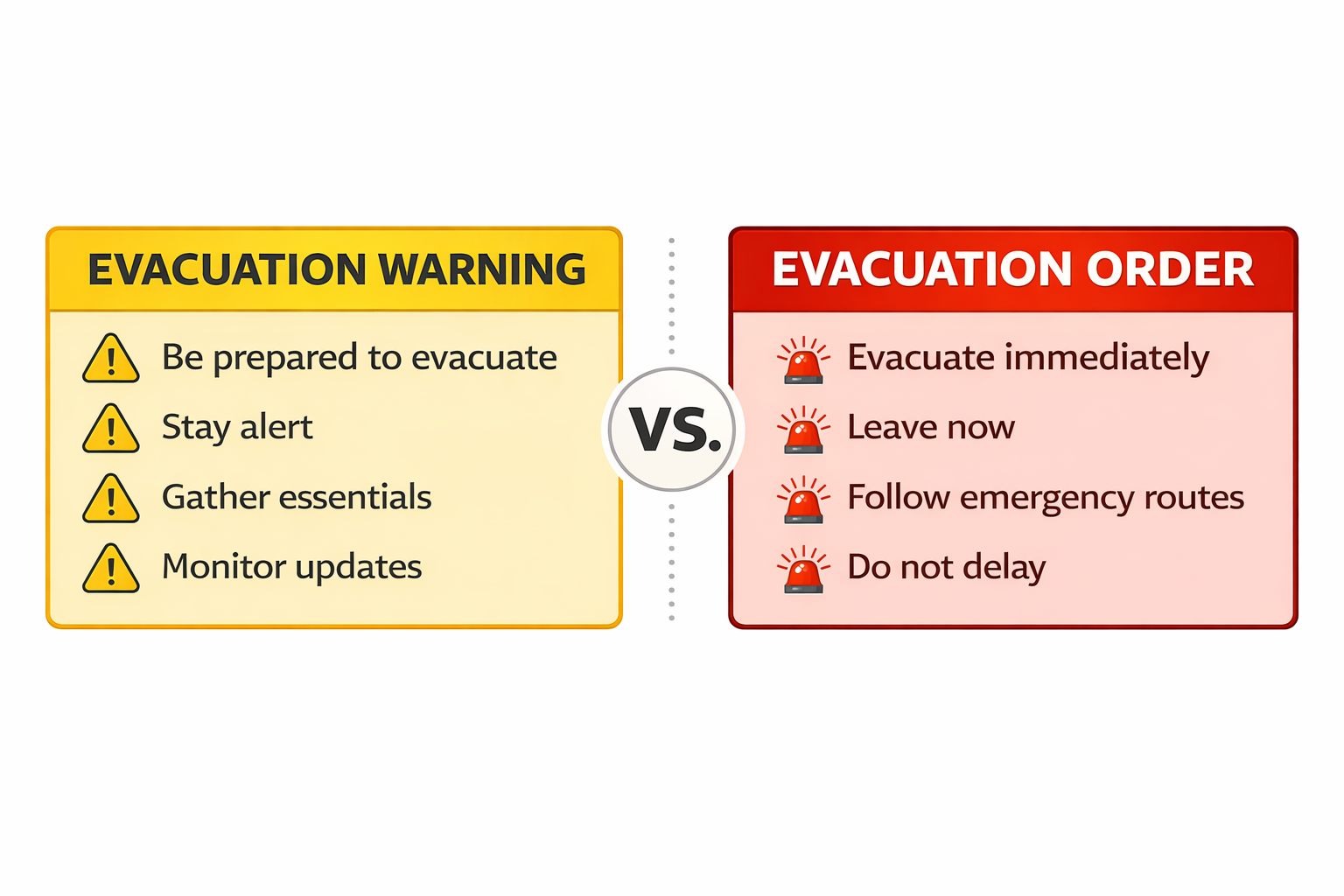
- Advisory notice
- Signals possible danger
- Encourages preparation
- Provides time to plan
Evacuation Order:
- Mandatory directive
- Indicates immediate danger
- Requires leaving right away
- Non-compliance can be life-threatening.
The transition from warning to order can happen quickly. In wildfire scenarios, this shift may occur in minutes rather than hours.
That’s why acting during the warning phase is often the safest decision.
How Authorities Decide to Issue Warnings?
Key factors include:
- Weather forecasts (wind speed, humidity, temperature)
- Fire behavior models
- Flood projections
- Terrain and vegetation conditions
- Availability of emergency resources
When they issue a warning, it’s because they see real danger, not mere speculation.
Real-Life Scenarios: How Fast Situations Escalate
Wildfires:
Flooding:
Hurricanes:
These examples highlight one key truth: waiting too long can leave you unable to leave safely.
What to Do Immediately After Receiving a Warning?
Step-by-Step Actions:
- Stay informed through official channels.
- Begin packing essential items.
- Charge all electronic devices.
- Fuel your vehicle
- Alert family members and coordinate plans
- Prepare pets and gather supplies.
- Review evacuation routes
Creating a Family Emergency Plan
Preparing ahead is as important as responding during a disaster.
A solid emergency plan should include:
- A designated meeting place
- Emergency contact list
- Multiple evacuation routes
- Assigned responsibilities for each family member
Building a Complete Emergency Go-Bag

- Identification and legal documents
- Medications and prescriptions
- Cash and emergency funds
- Water and non-perishable food
- Clothing and hygiene supplies
- First aid kit
Additional Items:
- Flashlights and batteries
- Portable radio
- Important personal items
- Copies of insurance policies
Preparing Your Home for Possible Evacuation
- Close windows and doors
- Remove flammable materials from outside.
- Turn off utilities if instructed.
- Leave the lights on for visibility.
Transportation and Evacuation Routes
- Identify at least two evacuation routes.
- Avoid relying solely on GPS
- Stay updated on road closures.
- Leave early to avoid traffic congestion.
Protecting Pets and Livestock
- Keep carriers ready
- Pack food, water, and medications.
- Ensure identification tags are updated.
Helping Vulnerable Individuals
This includes:
- Elderly individuals
- People with disabilities
- Children
- Those without transportation
Communication Strategies During Emergencies
- Use text messages instead of calls (less network strain)
- Have a backup communication plan.
- Keep emergency contacts written down.
- Monitor official updates regularly.
Common Mistakes People Make During Evacuation Warnings

- Waiting too long to act
- Underestimating the threat
- Failing to prepare in advance
- Ignoring official guidance
- Forgetting essential items
Psychological Readiness and Staying Calm
Tips:
- Focus on actionable steps.
- Stick to your plan
- Avoid misinformation
- Support family members emotionally.
Frequently Asked Questions About Evacuation Warnings
1. What is an evacuation warning, and how serious is it?
2. Should I leave during an evacuation warning or wait?
3. How long do evacuation warnings last?
4. Can an evacuation warning turn into an order quickly?
5. What is the biggest risk of ignoring an evacuation warning?
Final Thoughts
It is your critical early alert, a chance to act before danger becomes immediate. It’s not just a suggestion; it’s a lifesaving opportunity.
Every minute counts during an emergency. The actions you take during a warning phase can determine your safety, your family’s well-being, and your ability to recover afterward.
Preparation, awareness, and quick decision-making are your best defenses.
🚨 Strong Call to Action – From Eaton Fire
Disasters don’t wait, and neither should you.
At Eaton Fire, we’ve witnessed how quickly emergencies can escalate and how devastating delays can be. Too many families suffer unnecessary losses because they didn’t take evacuation warnings seriously.
Don’t become one of them.

If you’ve been affected by wildfire damage, evacuation losses, or insurance claim challenges, you deserve expert support.
👉 Contact Eaton Fire today for a free consultation for trusted guidance and dedicated assistance
👉 Protect your home, your rights, and your future
👉 Let our experienced team help you recover faster and stronger
When every second matters, preparation saves lives, and Eaton Fire is here to stand with you every step of the way.