
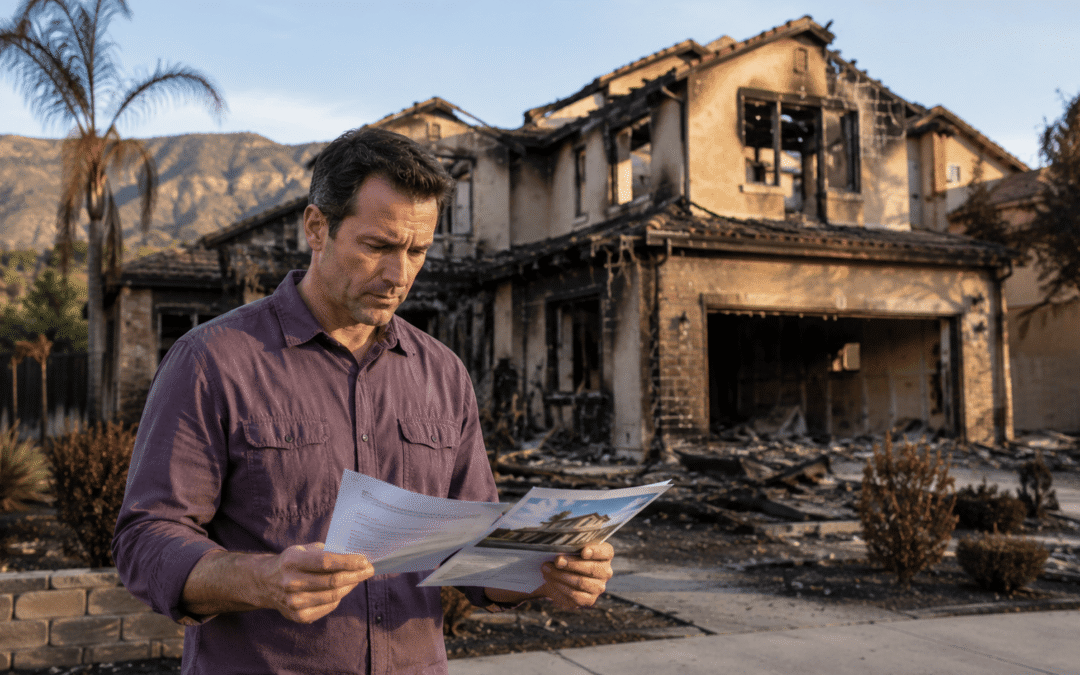
If a wildfire destroys or badly damages your home, your homeowners insurance is usually your first line of financial help. But sometimes, the insurance payout doesn’t cover the full cost of rebuilding, replacing your belongings, paying for temporary housing, or getting back on your feet. If you are asking what happens when wildfire insurance is not enough, the answer depends on your policy limits, what coverage you have, how much you lost, and what other financial help is available.
Table of Contents:
- Why Wildfire Insurance May Not Cover Everything?
- What Happens If Wildfire Insurance Is Not Enough?
- Understanding Underinsurance After a Wildfire
- Coverage Limits That Can Create Financial Gaps
- What Should You Do When Wildfire Insurance Is Not Enough?
- Can You Challenge an Insurance Settlement?
- Additional Financial Assistance Options After a Wildfire
- What Happens to Your Mortgage If Insurance Is Not Enough?
- Rebuilding vs. Selling After a Wildfire
- Five Common Questions About What Happens If Wildfire Insurance Is Not Enough
- The Hidden Costs Homeowners Often Forget
- Avoid Making Major Financial Decisions Too Quickly
- Keep Detailed Records Throughout the Recovery Process
- Communicate With Your Mortgage Servicer
- Understand the Difference Between Replacement Cost and Actual Cash Value
- How to Protect Yourself Against Future Underinsurance?
- Create an Updated Home Inventory
- Know Your Numbers Before Making a Recovery Decision
- Final Thoughts: What Happens If Wildfire Insurance Is Not Enough?
- Let Eaton Fire Help You Understand Your Options
Recovering from a wildfire is already hard, and it can be even more stressful to find out your insurance might not cover everything you lost. Learning about your options early can help you avoid costly mistakes and make better choices about your property, mortgage, insurance claim, and future.
Why Wildfire Insurance May Not Cover Everything
Many people think that having insurance means they can fully rebuild after a wildfire. Sadly, this is not always true. Insurance policies usually have different limits, exclusions, deductibles, and conditions. Most insurers do not guarantee to pay whatever it takes to get your life back to exactly how it was before the disaster.
Instead, the insurance company pays based on the exact terms and limits in your policy. There are several reasons why the amount your insurance pays might be much less than what you actually lost.
Your Dwelling Coverage May Be Too Low
Dwelling coverage helps pay to repair or rebuild your home’s physical structure.
Suppose your policy provides $500,000 in dwelling coverage, but rebuilding your home after a wildfire costs $650,000.
Without extra coverage for the difference, you might be left with a $150,000 gap. This is called being underinsured.
Construction Costs May Increase After a Wildfire
Wildfires can destroy hundreds or thousands of properties within the same region.
When large numbers of homeowners begin rebuilding simultaneously, demand increases for:
- Contractors
- Electricians
- Plumbers
- Roofers
- Engineers
- Building materials
- Heavy equipment
- Permits and inspections
When workers or materials are scarce, rebuilding costs can rise sharply.
A home that cost $400,000 to rebuild before the wildfire might cost much more after the disaster.
Building Codes May Have Changed
Older homes may have been built under construction codes that no longer apply.
When rebuilding, homeowners may be required to meet modern requirements involving:
- Fire-resistant construction
- Electrical systems
- Energy efficiency
- Roofing materials
- Structural standards
- Sprinkler systems
- Insulation
- Landscaping and defensible-space requirements
If your policy doesn’t have enough ordinance or law coverage, you may have to pay some of these extra costs yourself.
Personal Property Limits Can Be Insufficient
Insurance may cover furniture, electronics, appliances, clothing, tools, and other possessions.
However, limits or special sublimits may apply. Certain property categories can have significantly lower coverage limits, including:
- Jewelry
- Artwork
- Collectibles
- Firearms
- Cash
- Business equipment
- Antiques
- Valuable documents
If you don’t have extra scheduled coverage, you may get less than these items are really worth.
What Happens If Wildfire Insurance Is Not Enough?
If your insurance payout doesn’t cover all your wildfire losses, the remaining costs don’t just go away.

In many cases, you will need to find other ways to pay for the rest.
Depending on your circumstances, you may need to:
- Negotiate with your insurance company.
- Submit additional documentation
- Appeal part of the claim
- Use personal savings
- Apply for disaster assistance.
- Seek grants or charitable assistance.
- Consider disaster loans
- Modify your rebuilding plans.
- Sell the damaged property.
- Negotiate mortgage-related options
- Consult an insurance, legal, tax, or financial professional.
The gap between your losses and your insurance payout can change what options you have.
Understanding Underinsurance After a Wildfire
Underinsurance means your insurance limits are less than what it actually costs to cover your losses. This can happen even if you thought you bought enough insurance.
For example:

In this example, the homeowner faces a potential $265,000 gap.
That difference could make rebuilding financially difficult or impossible without additional resources.
Coverage Limits That Can Create Financial Gaps
To understand what happens when wildfire insurance isn’t enough, it helps to identify where coverage shortages commonly occur.
1. Dwelling Coverage
Dwelling coverage generally applies to the physical structure of the home.
The key number is usually the cost to rebuild the structure, not the property’s market value. Those numbers can be very different.
A home’s market value may reflect:
- Land value
- Neighborhood demand
- Location
- School districts
- Nearby amenities
Reconstruction costs instead depend heavily on labor, materials, engineering, permitting, demolition, and construction standards.
2. Extended Replacement Cost Coverage
Some policies include extended replacement cost protection.
This may provide additional money above the standard dwelling limit if reconstruction costs exceed expectations.
For example, a policy might offer additional protection equal to a percentage above the dwelling limit. However, terms and maximum amounts vary widely. Review your policy carefully instead of assuming you have unlimited coverage for rebuilding.
3. Guaranteed Replacement Cost
Some policies offer guaranteed replacement cost coverage, which can provide broader protection when rebuilding costs exceed stated policy limits.
However, availability and policy terms vary. Even policies described as providing replacement-cost protection can contain conditions that must be satisfied.
4. Additional Living Expenses
If your home becomes uninhabitable, Additional Living Expense coverage, sometimes called loss-of-use coverage, may help pay certain extra living costs.
These might include:
- Temporary housing
- Increased food expenses
- Laundry expenses
- Storage
- Transportation-related expenses
- Pet boarding in some circumstances
But this coverage might have limits on how much it pays, how long it lasts, or both. If rebuilding takes much longer than planned, you could use up this coverage before you can move back in.
5. Debris Removal
After a severe wildfire, removing debris can be extremely expensive.
Costs may include:
- Demolition
- Hazardous material removal
- Ash removal
- Tree removal
- Soil testing
- Site preparation
Your policy might include debris removal, but you should check the limits and rules carefully.
6. Ordinance or Law Coverage
Modern building standards can substantially increase reconstruction expenses.
Ordinance or law coverage may help pay certain costs related to complying with current building regulations. If you don’t have enough coverage, these costs can create another major gap in your finances.
What Should You Do When Wildfire Insurance Is Not Enough?
Discovering a coverage shortfall can be frightening, but homeowners should avoid making rushed financial decisions. Instead, work systematically through the claim and your available options.
Step 1: Obtain a Complete Copy of Your Insurance Policy
Don’t rely solely on the short declaration page.
Review the entire policy, including:
- Dwelling coverage
- Personal property coverage
- Additional living expenses
- Extended replacement coverage
- Building code coverage
- Debris removal coverage
- Landscaping coverage
- Other structures coverage
- Deductibles
- Endorsements
- Exclusions
You may find coverage you didn’t realize you had.
Step 2: Document Every Loss Carefully
Good records can make a big difference in your insurance claim.
Create detailed records of:
- Structural damage
- Personal property losses
- Temporary living expenses
- Cleanup expenses
- Contractor estimates
- Professional reports
- Communications with your insurer

Photos, videos, receipts, bank records, online orders, and credit card statements can help prove what you lost and how much it was worth.
Do not discard claim-related paperwork.
Step 3: Obtain Independent Rebuilding Estimates
The insurer’s estimate is not necessarily the final word on what reconstruction will cost.
Consider obtaining estimates from qualified professionals such as:
- Licensed contractors
- Engineers
- Architects
- Restoration specialists
- Construction estimators
Compare these estimates carefully with the insurer’s calculation.
If high costs are missing, document them.
Step 4: Review the Insurance Company’s Estimate Line by Line
Insurance estimates can contain thousands of individual items.
Look for missing or undervalued expenses involving:
- Flooring
- Roofing
- Cabinets
- Windows
- Doors
- Appliances
- Plumbing
- Electrical systems
- HVAC systems
- Landscaping
- Demolition
- Permit costs
- Engineering
- Debris removal
Even small differences can add up across an entire rebuilding project.
Can You Challenge an Insurance Settlement?
In some situations, yes. Receiving an insurance estimate or initial payment does not necessarily mean every aspect of the claim has been permanently resolved.
If you believe important losses were omitted or underestimated, you may be able to submit additional evidence.
Depending on the policy and circumstances, options could include:
- Requesting reconsideration
- Submitting supplemental claims
- Providing additional contractor estimates
- Providing receipts and documentation
- Using an appraisal process when applicable
- Filing a complaint with the appropriate insurance regulator
- Consulting a qualified attorney or public adjuster
Deadlines may apply, so homeowners should pay careful attention to all notices and policy requirements.
Additional Financial Assistance Options After a Wildfire
When insurance does not cover everything, other sources of assistance may sometimes be available. Availability depends heavily on the location, disaster declaration, household circumstances, and specific recovery programs.
Government Disaster Assistance
Following federally declared disasters in the United States, certain homeowners may qualify for assistance programs. These programs generally are not intended to replace insurance completely.
However, qualifying households may receive help for certain disaster-related needs that insurance did not cover. Always review eligibility requirements carefully.
Disaster Loans
Government-backed disaster loan programs may sometimes provide financing for homeowners, renters, or businesses affected by declared disasters.
Loans are different from grants.They generally must be repaid, so homeowners should evaluate monthly payments and long-term affordability before borrowing.
Local and Nonprofit Assistance
Wildfire recovery organizations sometimes provide:
- Emergency housing assistance
- Food
- Clothing
- Furniture
- Cleanup assistance
- Financial grants
- Case management
- Legal assistance
- Rebuilding resources
Local recovery centers can be valuable places to learn about available programs.
Personal Savings
Some homeowners use savings to cover insurance gaps. However, using retirement accounts or emergency funds can have serious long-term consequences. Before withdrawing large amounts, consider speaking with a qualified financial or tax professional.
What Happens to Your Mortgage If Insurance Is Not Enough?
One of the most confusing situations occurs when the home is destroyed, but the homeowner still has a mortgage. A wildfire does not normally erase the mortgage debt. You generally remain responsible for your mortgage unless you satisfy the debt through another arrangement.
Insurance checks for major structural claims may also include the mortgage servicer or lender as a payee because the lender has a financial interest in the property. Depending on the situation, insurance proceeds may be managed through a controlled rebuilding process.
Your mortgage servicer may release money in stages as reconstruction progresses. This creates an important challenge when insurance coverage falls short.
For example:
- Mortgage balance: $450,000
- Insurance rebuilding funds: $500,000
- Actual rebuilding cost: $700,000
The homeowner may need to find an additional $200,000 to complete the reconstruction as originally planned. If that is financially impossible, the homeowner may need to explore alternative strategies.
Rebuilding vs. Selling After a Wildfire
Not every homeowner ultimately chooses to rebuild. When insurance does not cover the entire loss, the financial calculation can become even more complicated.
Rebuilding May Make Sense When:
- Insurance covers most reconstruction costs.
- You have sufficient additional resources.
- You want to remain in the community.
- Your mortgage situation supports rebuilding.
- The rebuilding timeline is manageable.
Selling May Be Considered When:

- The coverage gap is extremely large.
- Rebuilding would require unaffordable debt.
- You want to relocate.
- Your financial circumstances have changed.
- Rebuilding could take several years.
- The property has meaningful land value even after the structure is destroyed.
There is no universally correct answer. The appropriate decision depends on insurance proceeds, mortgage debt, property value, available assistance, rebuilding costs, taxes, personal finances, and long-term plans.
Five Common Questions About What Happens If Wildfire Insurance Is Not Enough
1. What happens if wildfire insurance is not enough to rebuild my home?
If your insurance limits don’t cover the full reconstruction cost, you may need additional money from another source or to reduce the scope of the rebuilding project.
Possible sources include savings, disaster assistance, loans, supplemental insurance payments, and other recovery programs. Before paying the difference yourself, make sure the insurer’s rebuilding estimate is accurate and that you’ve considered all available policy benefits.
2. Can I ask my insurance company for more money after receiving a payment?
Potentially. Insurance claims sometimes include supplemental payments when you properly document additional covered damage or expenses.
For example, a contractor may identify legitimate rebuilding expenses that were not included in the insurer’s original estimate. Whether additional money is available depends on your policy, remaining coverage limits, documentation, deadlines, and the circumstances of your claim.
3. What if I cannot afford to rebuild after a wildfire?
If rebuilding is financially impossible, you may need to evaluate alternatives.
These may include:
- Modifying the size or design of the replacement home
- Exploring disaster assistance
- Applying for financing
- Selling the damaged property
- Negotiating with your mortgage servicer
- Relocating
Do not commit to major loans or construction contracts until you understand your complete financial position.
4. Does my mortgage disappear if my home burns down?
Generally, no. The mortgage is a debt secured by the property, and destroying the structure does not automatically eliminate that debt.
Homeowners should contact their mortgage servicer promptly after a wildfire to understand how insurance proceeds, payments, rebuilding requirements, and possible disaster-related assistance will be handled.
5. What should I do first if I believe I am underinsured?
Start by gathering your full insurance policy, insurance estimates, rebuilding estimates, mortgage information, and loss documentation. Then calculate the potential difference between what recovery is expected to cost and what insurance may provide.
Do not rely only on the first insurance estimate you receive. Understanding the true size of the gap is essential before deciding whether to rebuild, borrow additional money, or sell.
The Hidden Costs Homeowners Often Forget
One reason wildfire losses can exceed insurance payments is that rebuilding involves many expenses beyond the structure itself.
Homeowners should consider potential costs such as:
Temporary Housing
Reconstruction may take months or even years. Temporary housing can become one of the largest recovery expenses.
Increased Construction Costs
Material and labor prices can rise sharply after major disasters.
Architectural and Engineering Fees
Depending on the project, you may need architects, structural engineers, surveyors, or other professionals.
Permit Fees
Local permitting and inspection requirements can add additional costs.
Landscaping
Trees, fences, irrigation systems, patios, sheds, and other outdoor features may have limited insurance coverage.
Lost Personal Property
Recreating a complete household can cost significantly more than many homeowners expect.
Increased Mortgage or Financing Costs
If you must borrow to cover rebuilding shortages, interest expenses can substantially increase the long-term cost of recovery.
Avoid Making Major Financial Decisions Too Quickly
After a wildfire, homeowners are often under tremendous emotional and financial pressure. That creates conditions where costly mistakes can occur.
Try to avoid immediately:
- Signing expensive construction contracts
- Taking high-interest loans
- Selling the property without understanding its value
- Accepting a settlement without reviewing the details
- Spending insurance money without understanding lender requirements
- Draining retirement accounts
- Making irreversible financial commitments
Instead, gather information first.
Determine:
- Your total insurance benefits.
- Your remaining mortgage.
- Your estimated rebuilding cost.
- Your temporary housing expenses.
- Your available disaster assistance.
- Your property value.
- Your personal financial resources.
Once those numbers are clear, your available options become easier to evaluate.
Keep Detailed Records Throughout the Recovery Process
Wildfire recovery can generate hundreds of documents.
Create a dedicated system for keeping:
- Insurance letters
- Adjuster reports
- Contractor estimates
- Receipts
- Hotel bills
- Rental agreements
- Mortgage correspondence
- Government assistance documents
- Emails
- Photographs
- Inventories
- Professional reports
Consider storing copies digitally to protect important records. Documentation can make a major difference when resolving disputed expenses or requesting additional payments.
Communicate With Your Mortgage Servicer
If the damaged property has a mortgage, contact the servicer early.
Ask specific questions such as:
- How will insurance checks be handled?
- Will insurance proceeds be placed in escrow?
- How are rebuilding funds released?
- Are inspections required?
- What happens if I decide not to rebuild?
- Are disaster-related payment options available?
- What happens if insurance proceeds are less than the mortgage balance?
- What documents do I need to submit?
Keep written records of these conversations whenever possible.
Understand the Difference Between Replacement Cost and Actual Cash Value
Another reason insurance payments may initially appear lower than expected is how property is valued.
Replacement Cost Value
Replacement cost generally reflects the amount required to replace covered property with a comparable new item, subject to policy terms and limits.
Actual Cash Value
Actual cash value commonly accounts for depreciation.
For example, suppose a sofa originally cost $3,000 but was several years old when destroyed. An actual cash value payment may be substantially lower than the cost of buying a comparable new sofa today.
Some policies may initially pay actual cash value and provide additional recoverable depreciation after you replace items. Because policy language varies, it’s important to understand how your specific coverage works.
How to Protect Yourself Against Future Underinsurance?
Wildfires demonstrate how quickly rebuilding costs can change. Homeowners can reduce future risk by reviewing insurance regularly.
Consider discussing the following with your insurance professional:
- Current reconstruction cost estimates
- Extended replacement cost coverage
- Guaranteed replacement cost options
- Ordinance or law coverage
- Personal property limits
- Additional living expense limits
- Landscaping coverage
- Detached structure coverage
- High-value personal property
- Inflation protection
Don’t assume the policy you bought years ago still reflects today’s rebuilding costs.
Construction prices, labor rates, building codes, and home improvements can change significantly over time.
Create an Updated Home Inventory
A detailed home inventory can be extremely useful if disaster strikes.
Document:
- Furniture
- Electronics
- Appliances
- Clothing
- Tools
- Jewelry
- Artwork
- Sporting equipment
- Kitchen items
- Outdoor furniture
- Business equipment
- Collectibles
Photograph or video each room. Save receipts when practical. Keep backup copies of your inventory somewhere other than your home.
Know Your Numbers Before Making a Recovery Decision
When homeowners ask what happens if wildfire insurance isn’t enough, the most important step is understanding the full financial picture.
Calculate:
Estimated rebuilding cost
minus
Available insurance proceeds
equals
Potential rebuilding shortfall
Then include:
- Remaining mortgage debt
- Temporary living expenses
- Personal property replacement
- Cleanup expenses
- Code upgrade costs
- Available savings
- Disaster assistance
- Potential financing
This calculation can help reveal whether rebuilding is realistic or whether another financial strategy deserves consideration.
Final Thoughts: What Happens If Wildfire Insurance Is Not Enough?
So, what really happens if your wildfire insurance is not enough? You may face a financial gap between your insurance settlement and the true cost of recovering from the wildfire.
However, an initial insurance estimate should not automatically determine your next move.
Before making major decisions, take the time to understand:
- Every available insurance benefit
- The actual cost of rebuilding
- Your mortgage obligations
- Your personal property losses
- Temporary housing costs
- Disaster assistance opportunities
- The value of the damaged property
- Your long-term financial options
Wildfire recovery is rarely a simple insurance transaction. It can involve your home, mortgage, savings, future debt, family plans, and financial security all at once.
The more clearly you understand your numbers, the better prepared you will be to make a decision that protects your future.
Let Eaton Fire Help You Understand Your Options
If your home was damaged or destroyed by wildfire and your insurance payment does not appear sufficient, do not assume you have no options.

At Eaton Fire, we help wildfire-affected homeowners better understand the financial decisions that can arise after a devastating property loss. Whether you are facing an insurance shortfall, struggling with a mortgage on a damaged property, considering rebuilding, or exploring whether selling makes more sense, understanding your complete situation is the first step toward moving forward.
Your home may be gone, but your financial future does not have to disappear with it.
Contact Eaton Fire today for a free consultation. The sooner you understand your insurance, mortgage, property value, and potential recovery strategies, the sooner you can make a confident decision about what comes next.