
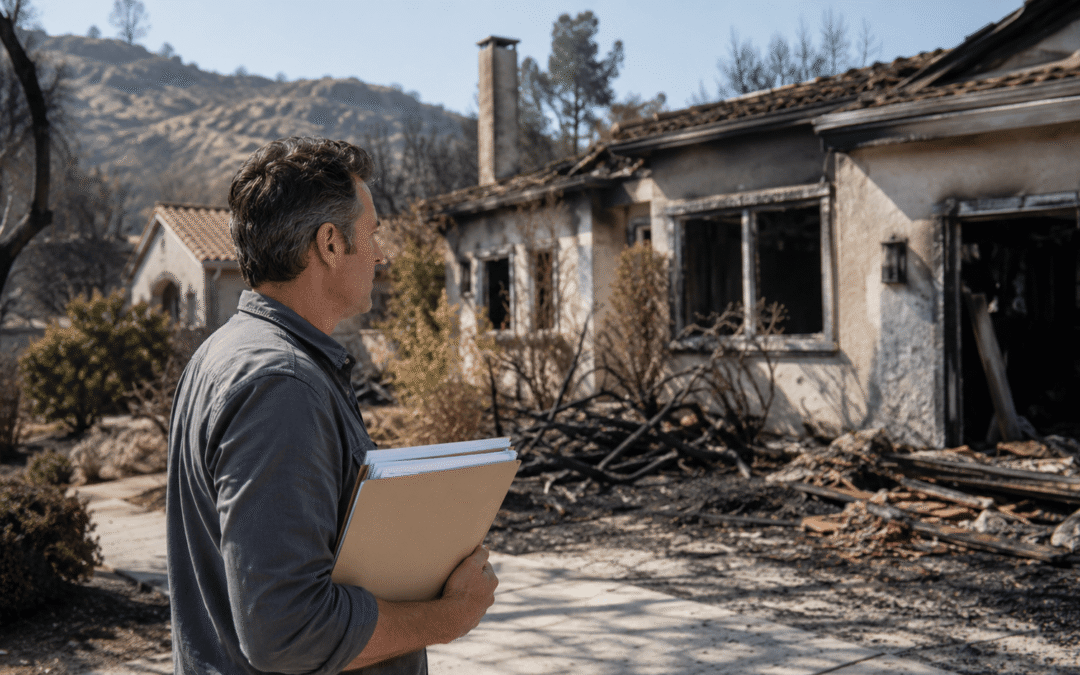
If your home is damaged or destroyed by a wildfire, your mortgage usually remains. You are still responsible for the loan, even if you cannot live in the home or it is a total loss. However, you may be able to get help through insurance, mortgage forbearance, disaster assistance, or other financial relief. This guide covers what happens to your mortgage after a wildfire, what steps to take, and how insurance and mortgage companies may work together during recovery.
Table of Contents:
- Does Your Mortgage Go Away After a Wildfire?
- What Happens Immediately to Your Mortgage After a Wildfire?
- How Does Homeowners Insurance Affect Your Mortgage?
- Why Is Your Mortgage Company on the Insurance Check?
- What Is Mortgage Forbearance After a Wildfire?
- What Happens If Your Home Is a Total Loss?
- Can Insurance Pay Off Your Mortgage?
- What If Insurance Is Not Enough to Cover the Mortgage?
- Five Common Questions About a Mortgage After a Wildfire
- Steps to Take After a Wildfire
- Mortgage Mistakes to Avoid After a Wildfire
- Mortgage After a Wildfire: The Bottom Line
- Recovering From a Wildfire? Contact Eaton Fire
Does Your Mortgage Go Away After a Wildfire?
No. In most cases, your mortgage remains active even if your home is severely damaged or destroyed. A mortgage is a loan you agreed to pay back when you bought or refinanced your home. The house is used as collateral, but damage to the property does not automatically erase the debt.
This means you may still need to make your regular mortgage payments unless your lender or mortgage servicer gives you temporary relief. If the wildfire has made it hard for you to pay your mortgage, contact your mortgage servicer right away. Tell them what happened and ask whether any disaster-related help is available.
What Happens Immediately to Your Mortgage After a Wildfire?
Your mortgage normally continues under its existing terms after a wildfire.

Unless your servicer gives you other instructions, your:
- Mortgage balance remains
- Monthly payments may still be due.
- Interest may continue
- Property taxes may still apply.
- Escrow payments may continue.
- Homeowners insurance requirements may remain.
Do not assume your payments are on hold just because your property was affected by a disaster.
Contact your mortgage servicer and ask:
- Do I qualify for disaster forbearance?
- Can my payments be temporarily reduced or suspended?
- Will late fees be waived?
- How will missed payments be repaid?
- How will my insurance settlement be handled?
- What happens if I decide not to rebuild?
Keep notes or copies of all your conversations with your lender or servicer.
How Does Homeowners Insurance Affect Your Mortgage?
Homeowners insurance is important after a wildfire because both you and your mortgage company have money invested in the property.
If your home is damaged, your insurer may issue payments for covered losses such as:
- Dwelling damage
- Personal belongings
- Other structures
- Temporary living expenses
- Debris removal
- Rebuilding costs
However, rebuilding funds may not go directly to you.
Your mortgage company might also be named on the insurance check.
Why Is Your Mortgage Company on the Insurance Check?
Mortgage companies are often included on large insurance settlement checks because they have a financial interest in the property. For example, an insurance check may be payable to both:
The homeowner and the mortgage company
Your servicer may place the funds into a special account and release the money in stages as repairs or rebuilding progress.
The process may include:
- An initial construction payment
- Additional payments as work progresses
- Property inspections
- Final payment after completion
Before you hire a contractor, ask your mortgage servicer how their insurance claim or payment process works. Knowing how this process works can help you avoid delays or money problems while you rebuild.
What Is Mortgage Forbearance After a Wildfire?
Mortgage forbearance lets some homeowners pause or lower their mortgage payments for a while if they are having money troubles.

This can be especially helpful after a wildfire when you may suddenly face expenses related to:
- Temporary housing
- Transportation
- Food
- Replacing personal belongings
- Insurance deductibles
- Cleanup
- Lost income
However, forbearance does not usually erase your mortgage payments. You generally still need to repay the missed amounts later.
Before agreeing to forbearance, ask your servicer:
- How long will the forbearance last?
- Will interest continue?
- How will missed payments be repaid?
- Will I owe a lump sum?
- Can payments be deferred?
- Is a loan modification available?
Knowing what happens after forbearance ends is just as important as getting temporary payment relief.
What Happens If Your Home Is a Total Loss?
If your home is destroyed, the mortgage still generally remains.
You may need to decide whether to:
- Rebuild the home
- Use insurance proceeds toward the mortgage.
- Sell the property
- Explore another financial solution.
The right choice depends on your mortgage agreement, insurance payout, coverage, and your own finances.
If you plan to rebuild, your mortgage company may oversee the release of insurance funds throughout construction. If you do not plan to rebuild, ask whether you can use the insurance proceeds to pay down or pay off your mortgage. Do not assume you can keep all the insurance money or use it any way you want.
Can Insurance Pay Off Your Mortgage?
It may be possible, depending on your loan documents, insurance settlement, and mortgage servicer requirements.
For example, imagine you owe $250,000 on your mortgage and receive a qualifying insurance settlement of $450,000. You might assume you can pay off the mortgage and keep the remaining money. However, your mortgage agreement may require you to use the insurance proceeds to rebuild.
Your lender may also have certain rights regarding the funds. Always ask your mortgage servicer for written details on how you can use the insurance money.
What If Insurance Is Not Enough to Cover the Mortgage?
Your insurance settlement and mortgage balance may not match.
For example:
- Mortgage balance: $400,000
- Available dwelling insurance payment: $325,000
This could create a financial gap. Insurance coverage is generally based on the terms and limits of your policy, while your mortgage balance is based on the amount you still owe.
If insurance is not enough, contact your mortgage servicer to discuss your options. You may also want to talk to a financial, legal, or insurance expert before making big decisions.
Five Common Questions About a Mortgage After a Wildfire
1. Do I Still Have to Pay My Mortgage If My House Burns Down?
Generally, yes. The destruction of your home does not automatically cancel the mortgage. You should continue following your loan requirements unless your mortgage servicer approves another arrangement.
If you are struggling financially, ask about disaster-related assistance immediately.
2. Can I Stop Making Mortgage Payments After a Wildfire?
Do not stop making payments without contacting your servicer first. Missing payments without an approved agreement could potentially result in:
- Late fees
- Delinquency
- Credit problems
- Collection activity
- Default
If you need help, ask about forbearance or other disaster-relief programs.
3. Can I Get Mortgage Forbearance After a Wildfire?
Possibly.Many homeowners affected by natural disasters may qualify for temporary mortgage relief. Eligibility can depend on:
- Your mortgage type
- Loan owner
- Disaster declaration status
- Property damage
- Financial hardship
Contact your mortgage servicer to determine what assistance is available.
4. Can My Mortgage Company Hold My Insurance Money?
Yes, in some situations. If the insurance payment is intended to repair or rebuild the home, your mortgage servicer may hold the funds and release them in stages. This helps ensure the money is used to restore the property securing the loan. Ask your lender for your insurance claim or loss-draft requirements in writing.
5. What Should I Do First About My Mortgage After a Wildfire?
Contact your mortgage servicer as soon as possible.
Tell them:
- Your property was affected by a wildfire.
- Whether the home is habitable
- Whether your income was affected
- Whether you have filed an insurance claim
- Whether you expect difficulty making payments
Then ask about disaster-related assistance and how to handle insurance proceeds.
Steps to Take After a Wildfire
Taking clear steps can help protect your finances.
1. Contact Your Insurance Company
Report the damage and begin your claim.
Ask about:
- Coverage limits
- Deductibles
- Temporary housing
- Personal property coverage
- Rebuilding benefits

2. Contact Your Mortgage Servicer
Explain your situation and ask about available disaster-relief options.
3. Ask About Forbearance
If you cannot afford your normal mortgage payment, determine whether you qualify for temporary payment relief.
4. Understand How Insurance Funds Will Be Released
Find out whether your mortgage company must approve insurance checks and how it will distribute rebuilding funds.
5. Keep Detailed Records
Save copies of:
- Insurance documents
- Mortgage statements
- Emails
- Letters
- Contractor estimates
- Receipts
- Photographs
- Temporary housing expenses
Keeping good records can make recovery much easier.
Mortgage Mistakes to Avoid After a Wildfire
Recovering from a wildfire can feel overwhelming, but avoiding some common mistakes can help protect your finances.
Assuming Your Mortgage Is Automatically Suspended
Your mortgage normally remains active unless your servicer approves relief.
Stopping Payments Without Approval
Always speak with your mortgage company before missing a payment.
Thinking Forbearance Means Forgiveness
Forbearance generally postpones payments rather than eliminates them.
Spending Insurance Money Too Quickly
Some insurance funds may be controlled by your mortgage company or required for rebuilding.
Hiring a Contractor Before Understanding the Payment Process
Find out when insurance money will be available before you sign any big construction contracts.
Failing to Keep Records
Document every conversation with your insurer, mortgage company, and contractor.
Mortgage After a Wildfire: The Bottom Line
So, what actually happens to your mortgage after a wildfire?
In most cases, the mortgage remains your responsibility even when the home is damaged or destroyed.
However, homeowners may have several options, including:
- Mortgage forbearance
- Temporary payment relief
- Repayment plans
- Loan modifications
- Insurance proceeds
- Disaster assistance
The most important thing you can do is communicate.
Contact your insurance company and mortgage servicer as soon as possible. Understand how your insurance settlement will be handled, ask about available mortgage relief, and avoid making major financial decisions before you understand all your options.
Recovering From a Wildfire? Contact Eaton Fire
Recovering from a wildfire involves much more than rebuilding a house. Homeowners may need to manage mortgage payments, insurance claims, temporary housing, financial losses, and difficult long-term decisions at the same time.

At Eaton Fire, we understand how complicated the recovery process can become.
If a wildfire has damaged or destroyed your home, clear information early can help you make informed decisions and protect your financial recovery.
Contact Eaton Fire today for a free consultation to learn more about the support and resources available to wildfire-affected homeowners. Take the next step toward understanding your options and rebuilding with confidence.