
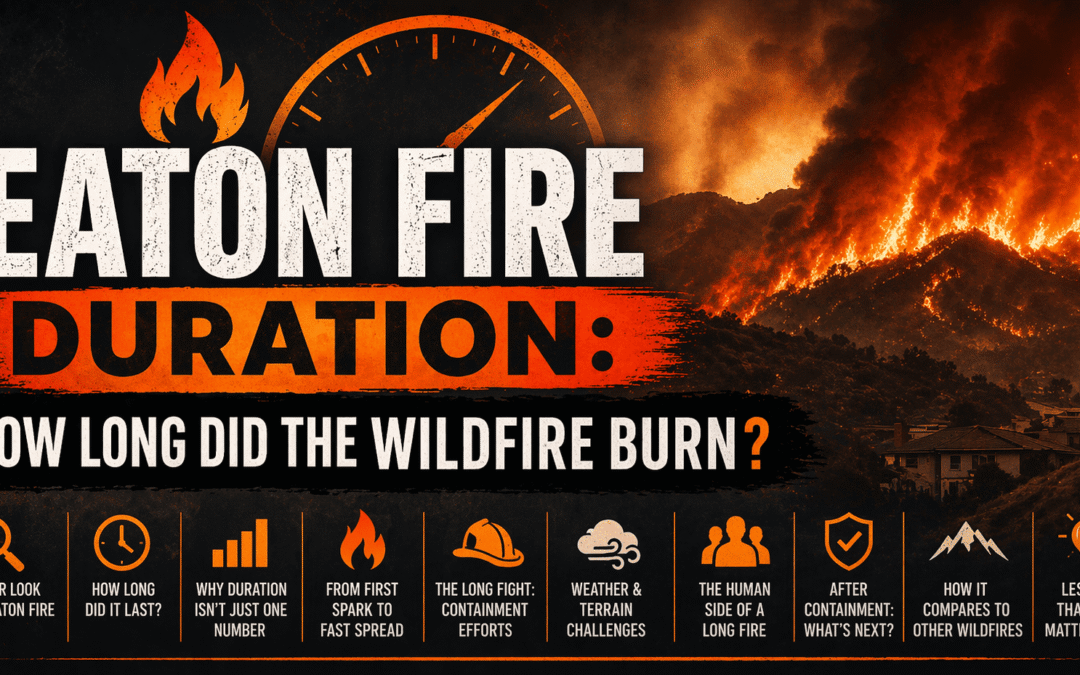
Wildfires don’t stick to a schedule. They can start any time and rarely end when we hope. They change, grow, and often last longer than anyone expects. That’s why so many ask: how long did the Eaton Fire last?
At first, it seems like a simple question. But if you look closer, the answer reveals a bigger story about fear, resilience, nature, and the long journey to recovery.
This guide will take you through the Eaton Fire in a real, relatable way. We’ll go beyond facts and numbers to show what the timeline meant for those who lived through it. You’ll find a clear answer to the main question. You’ll also see why wildfires like this rarely have a simple start or finish.
📑 Table of Contents:
- A Closer Look at the Eaton Fire
- How Long Did the Eaton Fire Last? (Clear Answer)
- Why Wildfire Duration Isn’t Just One Number?
- The First Signs: How the Fire Began
- When Everything Escalated: The Fast Spread Phase
- The Long Fight: Containment Efforts
- Why It Took So Long to Put Out?
- The Role of Weather: A Constant Wild Card
- The Landscape: How Terrain Made Things Harder
- The Human Side of a Long-Lasting Fire
- What Happens After “Containment”?
- Comparing the Eaton Fire to Other Wildfires
- Lessons That Still Matter Today
- Frequently Asked Questions
- Final Thoughts
- Call to Action
1. A Closer Look at the Eaton Fire
To see how long the Eaton Fire lasted, it helps to know what kind of wildfire it was. It wasn’t just a single event. It changed over time.
The Eaton Fire didn’t flare up and vanish in a few hours. It wasn’t a small brush fire that crews could quickly put out. It was a wildfire that kept changing and reacting to its surroundings. Every hour, different conditions, some expected, some not affected, how it burned.
At its core, the fire was shaped by four major elements:
- Weather – Wind speed and direction, temperature, and humidity constantly changed how the fire moved
- Vegetation (fuel) – Dry grass, shrubs, and trees gave the flames something to feed on, often in abundance.
- Terrain – Hills, slopes, and hard-to-reach areas made it difficult for firefighters to respond quickly.
- Human response – The speed and scale of firefighting efforts played a crucial role in slowing its spread
These factors didn’t act separately. Together, they sometimes made things worse in unpredictable ways. A strong wind could move the fire to a new spot. A hill could make it go faster. Dry weather could let embers set new fires far away.
Because of these factors, the Eaton Fire didn’t follow a simple timeline. It grew, slowed, changed direction, and even started up again in places already burned. That’s why it’s hard to give a simple start and end date for the fire’s duration.
But there’s more to the story than just the technical details. The human side is often missed.
For people in the affected areas, time didn’t feel like days or weeks. It felt long, uncertain, and stressful.
Every day brought new questions:
- Is the fire getting closer?
- Will we have to evacuate?
- Is our home still standing?
Families checked for updates, refreshed news, and waited for alerts. Nights were hardest, marked by distant flames and smoke in the air.
Evacuations made things even more uncertain. Some people left quickly, unsure if they would return. Others stayed, watched the fire, and hoped it would turn.
During those times, the fire was more than a physical danger. It affected routines, displaced families, and created ongoing uncertainty.
That’s something most timelines don’t show.
When people ask how long the Eaton Fire lasted, they usually think about the flames. For those affected, the experience lasted much longer. It included the days before evacuation, the time away, and the uncertainty that remained after containment.
Wildfires like the Eaton Fire don’t just burn land. They alter time. Hours drag, days blur, and waiting fills life.
In the end, a wildfire isn’t only measured by how long it burns.
A wildfire’s duration also includes its lasting effects.
2. How Long Did the Eaton Fire Last? (Clear Answer)

The Eaton Fire burned for an estimated 3 to 4 weeks. The main ignition date was in early January 2025, with the most active period spanning about 5 to 10 days following ignition.
After that, efforts to bring the fire under control continued for another 1 to 2 weeks, with full extinguishment coming sometime after initial containment.
- The most intense burning phase occurred during the first 5 to 10 days after the fire began in early January (Eaton Fire: Incident Update on 01/11/2025 at 11:23 AM, 2025).
- Containment efforts stretched into the period between 2 and 3 weeks after ignition, with notable progress by January 23 (Eaton Fire: Incident Update on 01/23/2025 at 10:55 AM, 2025).
- According to the Eaton Fire Incident Update on 01/18/2025 at 2:43 PM, full extinguishment may have taken even longer due to likely lingering hotspots.
3. Why Wildfire Duration Isn’t Just One Number
But wildfires aren’t that simple.
When people ask, “How long did the Eaton Fire last?” they usually think of flames.
Firefighters see phases:
- Ignition – when it starts
- Active burn – when it spreads rapidly
- Containment – when it’s controlled
- Extinguishment – when it’s truly out
That’s why two people might give different answers to the same question, and both could be correct.
4. The First Signs: How the Fire Began
Every wildfire starts small.
At first, the Eaton Fire was just a spark. It might have gone unnoticed if the conditions had been different.
But conditions weren’t different.
The ground was dry. Vegetation was ready to burn. The air likely lacked moisture. And once the fire caught, it didn’t hesitate.
Within hours, what could have been manageable turned into something far more serious.
This early stage is crucial. It’s also when time starts working against everyone.
5. When Everything Escalated: The Fast Spread Phase
If you’ve ever watched footage of a wildfire, you’ve seen how quickly things can change.
One moment, it’s a controlled burn. Next, flames race across hillsides.
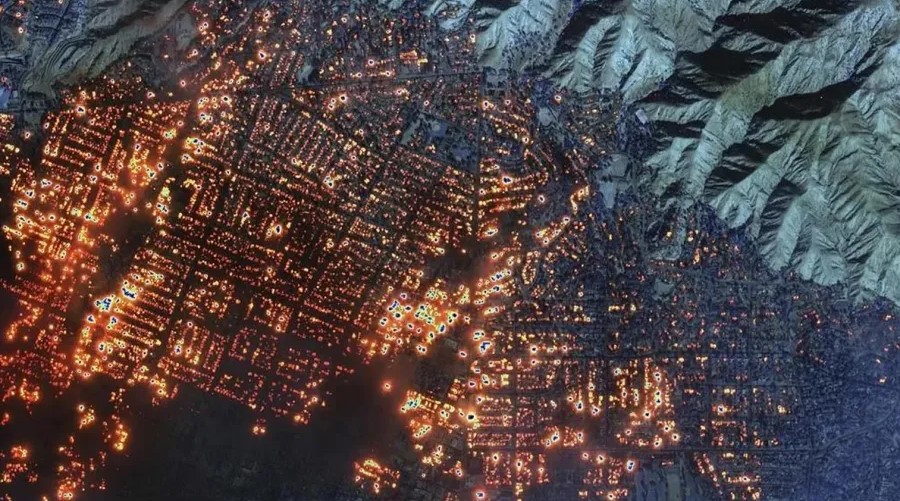
- Flames moved faster than crews could respond.
- Winds pushed embers into new areas.
- Evacuations became urgent
This is often the scariest part. It’s not just the fire itself, but also the unpredictability.
For many families, this was the moment everything changed.
6. The Long Fight: Containment Efforts
Once a wildfire reaches peak intensity, the focus shifts. Stopping it immediately is not the focus then. The goal becomes controlling its spread.
This is where the timeline stretches.
Firefighters don’t just “put out” a wildfire like a campfire. Instead, they:
- Build containment lines
- Clear vegetation to stop the spread
- Use aircraft to slow flames.
For the Eaton Fire, this phase likely lasted days to weeks, depending on how conditions evolved.
7. Why It Took So Long to Put Out
If you wonder why the Eaton Fire didn’t get put out quickly, you’re not alone.
Many people want to know this. The answer is complicated.
Wildfires are fueled by three main things:
- Fuel – dry grass, trees, debris
- Weather – wind, heat, humidity
- Terrain – hills, valleys, access points
If all three work against firefighters, the fire lasts longer.
And in many cases, including the Eaton fire, they are.
Even when the flames seem under control, fire can linger. It might hide underground, inside tree roots, or in debris.
That’s why a fire being called “out” doesn’t always mean it’s gone.
8. The Role of Weather: A Constant Wild Card
Weather can make or break firefighting efforts.
A sudden wind shift can undo hours of work. A drop in humidity can make everything burn faster. A heatwave can stretch the fire’s life even more.
For the Eaton Fire, dry conditions likely played a big role in how long it lasted.
Until the weather improves, firefighters face an uphill battle in every way.
9. The Landscape: How Terrain Made Things Harder
Not all fires happen on flat, easy-to-access land.
If the Eaton Fire spread through rugged terrain, that alone could explain its length.
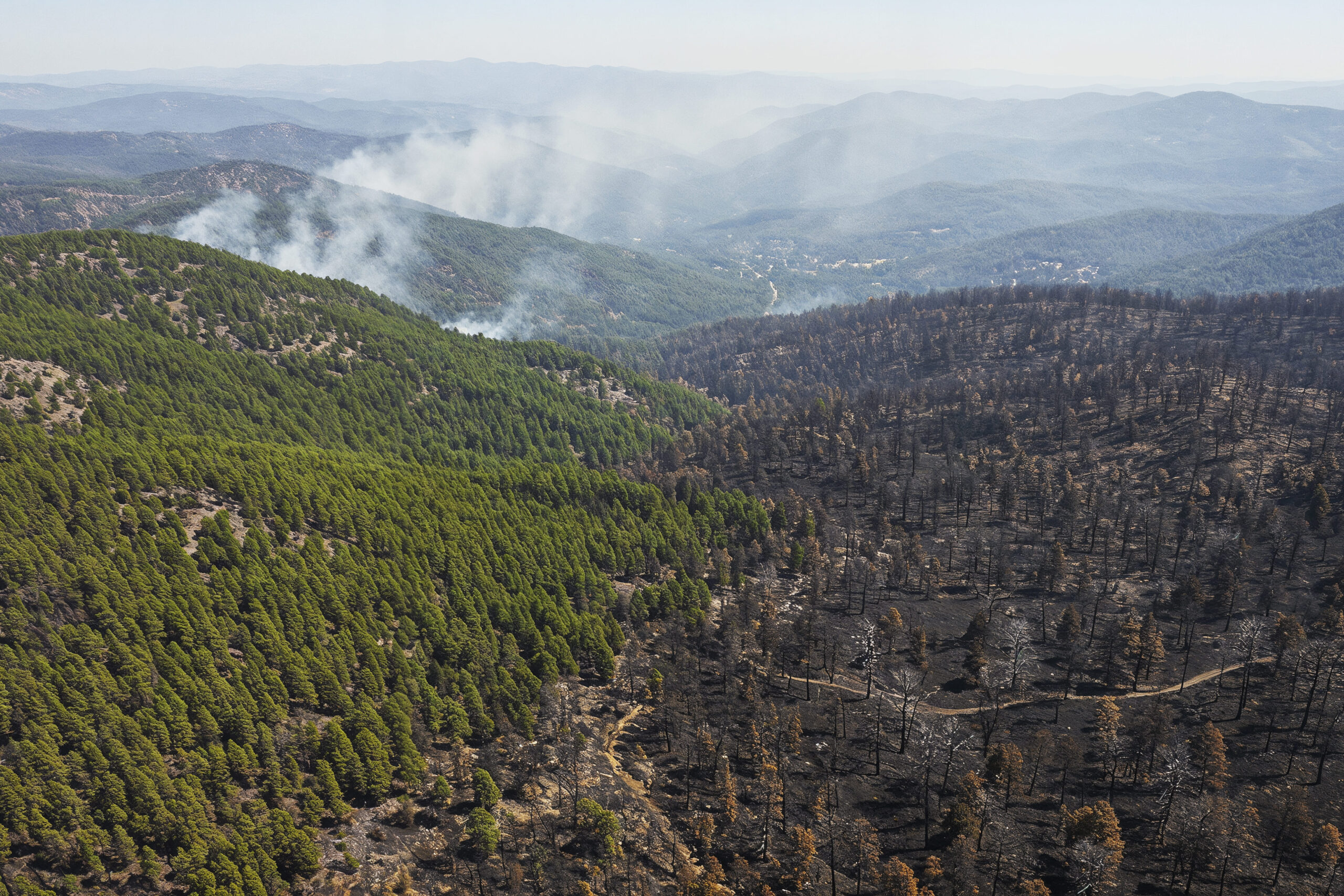
- Steep hills slow down crews.
- Remote areas are harder to reach
- Fire travels faster uphill.
And each challenge adds more time.
10. The Human Side of a Long-Lasting Fire
It’s easy to focus on timelines and strategies, but every wildfire affects real people.
People who had to leave their homes quickly.
People who didn’t know if they’d have anything to return to.
People who waited sometimes for weeks for answers.
When you ask how long the Eaton Fire lasted, remember that for many people it felt much longer than the official timeline suggests.
Recovery doesn’t begin when the fire ends. It begins after.
11. What Happens After “Containment”
Many people may not realize this: A fire being “contained” doesn’t mean it’s gone.
It just means it’s no longer spreading uncontrollably.
After containment:
- Crews monitor hotspots
- Smoldering areas are extinguished.
- The risk of reignition remains.
So when figuring out how long the Eaton Fire lasted, this period counts as well.
12. Comparing the Eaton Fire to Other Wildfires
- Small fires: a few hours to a couple of days
- Medium fires: several days to a few weeks
- Large fires: weeks to months
The Eaton Fire falls somewhere in the medium-to-large range, based on its extended duration (Eaton Fire, 2025).
That’s not unusual, but it doesn’t matter.
13. Lessons That Still Matter Today
Every wildfire teaches us something.
The Eaton Fire is no different.
Preparedness matters
Early response is critical.
Conditions are changing
14. Frequently Asked Questions
2. Why did it take so long to control?
3. Was the fire still dangerous after containment?
4. Could the fire have been stopped sooner?
5. Do wildfires like Eaton usually last this long?
15. Final Thoughts
The real answer is that it lasted long enough to leave a lasting impact.
The most intense flames may have burned for days, but the fire’s full timeline lasted weeks. For many people, its effects will last even longer.
Wildfires show us how quickly things can change and why being prepared matters.
We can’t control when a fire starts, but we can control how we respond.
16. Strong Call to Action – We Are Eaton Fire
If the Eaton Fire or another wildfire has affected you, you don’t have to face the aftermath alone.
We are Eaton Fire.

We’re here to help individuals and families at every stage of recovery, from understanding your situation to taking the next steps.
👉 Whether you need guidance, resources, or real support, we’re ready to stand with you.
👉 Don’t wait until the next emergency to get informed and prepared.
Contact Eaton Fire today for a free consultation and begin rebuilding with clear information, confidence, and the support you need.