
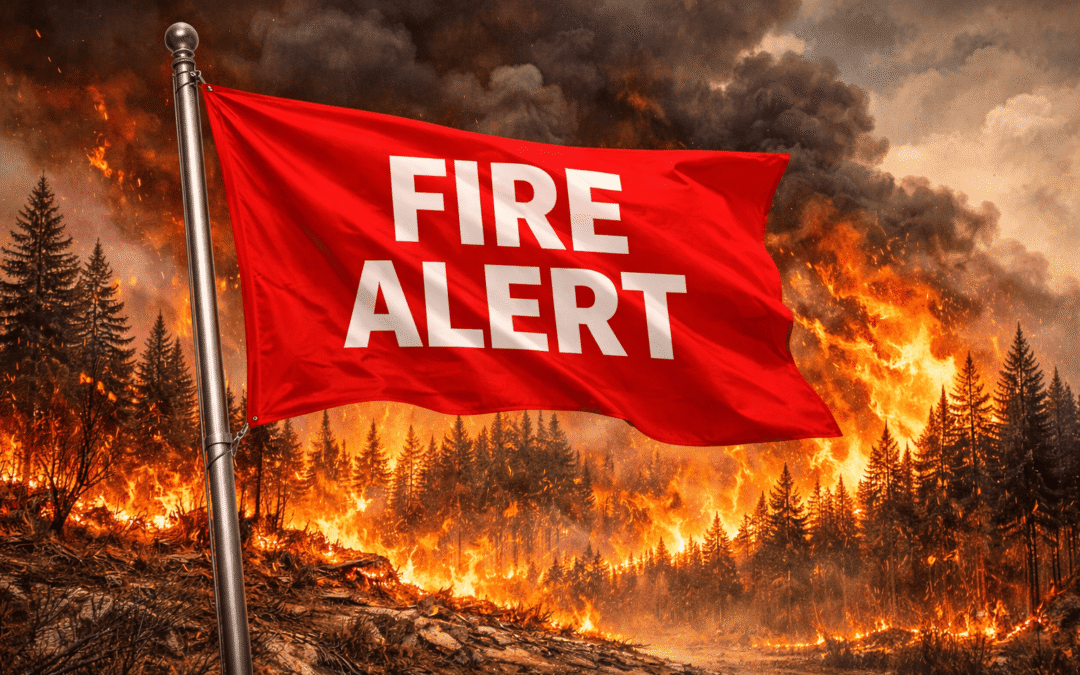
When extreme fire weather conditions are on the horizon, the National Weather Service (NWS) may issue a Red Flag Warning. But what does a red flag warning mean for your home, your family, and your community? In this comprehensive guide, we’ll explain exactly what a red flag warning means, why it matters during wildfire season, and how you can protect yourself and your property.
Table of Contents
- What Does a Red Flag Warning Mean?
- Who Issues a Red Flag Warning and Why?
- What Weather Conditions Trigger a Red Flag Warning?
- What Does a Red Flag Warning Mean for Wildfire Risk?
- What Should You Do During a Red Flag Warning?
- Red Flag Warning vs. Fire Weather Watch: What’s the Difference?
- The Role of Climate Change in Increasing Red Flag Warnings
- How to Prepare Your Home Before a Red Flag Warning
- Frequently Asked Questions About Red Flag Warnings
- The Psychological Impact of Red Flag Warnings
- Community Responsibility During Red Flag Warnings
- Technology and Red Flag Monitoring
- Why Understanding Red Flag Warnings Saves Lives
- Final Thoughts and How Eaton Fire Can Help
What Does a Red Flag Warning Mean?
If you’ve ever wondered what a red flag warning means, it signals that critical fire weather conditions are happening now or soon.
A red flag warning means that a combination of strong winds, low humidity, and warm temperatures has created an environment where wildfires can ignite easily and spread rapidly. Even a small spark, whether from a downed power line, equipment use, or a discarded cigarette, can quickly grow into a fast-moving wildfire.
This warning is not issued lightly. It represents a high level of concern among meteorologists and fire officials. When a red flag warning is in effect, fire agencies often increase staffing levels, restrict certain outdoor activities, and prepare for potential wildfire response.
In wildfire-prone regions like those affected by the Eaton Fire, understanding what a red flag warning means can make the difference between early action and devastating loss.
Who Issues a Red Flag Warning and Why?
- Alert the public to dangerous fire weather conditions.
- Help emergency services prepare for rapid wildfire response.
- Reduce human-caused ignitions
- Minimize potential property damage and loss of life.
When officials determine that fire weather thresholds are being met or will soon be met, they activate this warning to prompt immediate public awareness.
In practical terms, a red flag warning means authorities expect fire behavior to become extreme and unpredictable if ignition occurs.
What Weather Conditions Trigger a Red Flag Warning?
1. Low Relative Humidity
2. Strong Winds
3. Warm or Hot Temperatures
4. Dry Fuels
Even if weather conditions are moderate, drought-stricken vegetation increases fire danger. During prolonged dry periods, it takes less wind and lower humidity to trigger a red flag warning.
What Does a Red Flag Warning Mean for Wildfire Risk?
Under red flag conditions:
- Fires ignite more easily.
- Fires spread faster
- Spot fires can start miles away from the original blaze.
- Containment becomes more difficult.
- Evacuations may occur with little notice.
Wildfires under red flag warnings can double or triple in size within hours. Wind-driven embers can jump highways, rivers, and firebreaks.
This phenomenon is why many devastating wildfires begin during red flag periods. Communities that have experienced destructive fires know how quickly conditions can escalate.
What Should You Do During a Red Flag Warning?
Avoid Outdoor Burning
Delay Equipment Use
Secure Outdoor Items
Prepare for Possible Evacuation

- Keep emergency kits ready.
- Ensure vehicles have fuel.
- Review evacuation routes
- Monitor official alerts
Red Flag Warning vs. Fire Weather Watch: What’s the Difference?
Fire Weather Watch
Red Flag Warning
How Red Flag Warnings Impact Public Safety and Infrastructure
Public Safety Risks
- Increased wildfire ignition
- Rapid evacuation scenarios
- Road closures
- Reduced air quality
Infrastructure Concerns
- Utilities may implement Public Safety Power Shutoffs (PSPS)
- Transportation disruptions
- Increased emergency response demand
The Role of Climate Change in Increasing Red Flag Warnings
Longer drought periods, higher average temperatures, and earlier snowmelt all contribute to extended fire seasons. As a result, red flag warnings are becoming more frequent and lasting longer.
Understanding what a red flag warning means today also involves recognizing broader environmental shifts that make these conditions more common.
How to Prepare Your Home Before a Red Flag Warning
Create Defensible Space
Harden Your Home
- Install ember-resistant vents
- Use fire-resistant roofing
- Clean gutters regularly
Develop a Family Emergency Plan
- Establish communication protocols
- Identify meeting points
- Keep important documents accessible.
Frequently Asked Questions About Red Flag Warnings

A red flag warning means your neighborhood faces increased wildfire danger. If a fire starts, it could spread rapidly and threaten homes.
Fire departments may pre-position resources and increase patrols. Residents should remain alert and prepared to evacuate.
2. Does a Red Flag Warning Mean There Is an Active Fire?
No. A red flag warning does not mean a fire is currently burning. It means the conditions are ideal for one to start and spread quickly.
However, if a fire does ignite during red flag conditions, it can escalate rapidly.
3. How Long Does a Red Flag Warning Last?
Red flag warnings typically last from several hours to a full day, but they can be extended if dangerous conditions persist.
Always monitor updates from local authorities.
4. What Activities Are Restricted During a Red Flag Warning?
- Outdoor burning bans
- Prohibitions on fireworks
- Restrictions on equipment use
- Campfire closures
5. What Does a Red Flag Warning Mean for Evacuations?
A red flag warning does not automatically trigger evacuation. However, it increases the likelihood of evacuations if a fire ignites.
During red flag conditions, evacuations may happen quickly with little notice.
The Psychological Impact of Red Flag Warnings
Hearing that a red flag warning is in place can create anxiety. That’s understandable. These warnings are serious.
However, they are also protective tools. They give you time to prepare rather than react.
Preparedness transforms fear into action.
Community Responsibility During Red Flag Warnings
Wildfire prevention is a shared responsibility.
During red flag warnings:
- Avoid careless behavior
- Report smoke immediately
- Follow official guidance
- Assist vulnerable neighbors
Technology and Red Flag Monitoring
These technologies help ensure red flag warnings are issued accurately and promptly.
Why Understanding Red Flag Warnings Saves Lives
Knowledge leads to:
- Faster evacuation decisions
- Reduced accidental ignitions
- Better emergency readiness
- Fewer injuries and fatalities
Final Thoughts: Don’t Ignore a Red Flag Warning
A red flag warning is a serious alert that conditions are primed for dangerous wildfire behavior. It does not mean panic, but it absolutely means preparation.
When you understand what a red flag warning means, you empower yourself to act early, protect your property, and safeguard your loved ones.
Wildfires can move faster than you think. Conditions can change within minutes. Preparation today can prevent tragedy tomorrow.

Protect Your Family and Property. Contact Eaton Fire Today
At Eaton Fire, we understand the devastation wildfires can cause because we’ve seen it firsthand. If your home or business has been impacted by wildfire or if you want guidance on protecting your property before the next red flag warning, our experienced team is here to help.
Don’t wait until flames are on the horizon.
📞 Contact Eaton Fire today for a free consultation, fire damage assistance, and proactive protection strategies.
🌲 Your safety is our mission.
🔥 When red flag warnings rise, Eaton Fire stands ready.
Act now. Prepare now. Protect what matters most.